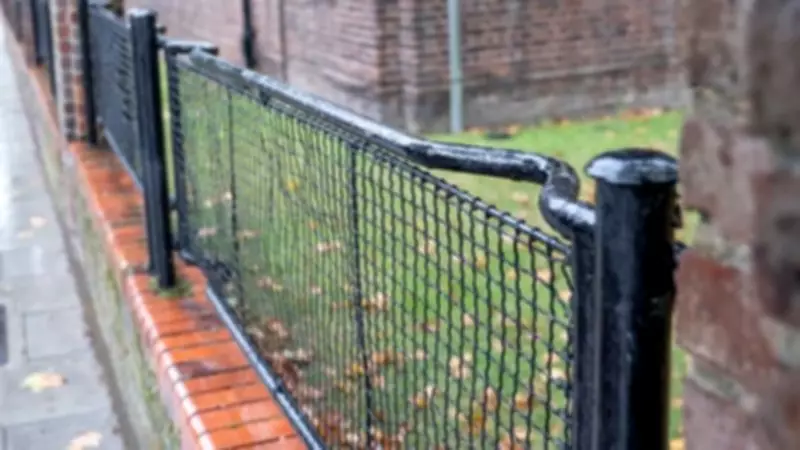
Many residents and tourists walking through London frequently pass distinctive, wavy metal railings without ever realising their true historical significance. These architectural features often appear to be nothing more than a unique design choice found across the capital’s older estates.
However, these curved bars actually played a monumental role in protecting the public during the Second World War. They represent a remarkable piece of British heritage that remained hidden in plain sight for decades after the conflict ended. Historian Alice Loxton recently highlighted that although these items look like standard fences, they are a fundamental link to the city’s wartime survival. She explained that they tell a story of resilience and practical engineering from a dark time in the capital's past.
Emergency Stretchers Repurposed
In a TikTok video, Loxton explained: "They are the emergency stretchers used by Air Raid officers to carry wounded civilians during the Blitz. Thousands of stretchers were produced for the war effort. They were made from a single material, making them cheap to manufacture."
The design too was straightforward - two poles flanking a stretch of wire mesh - this meant they were very easy to clean, particularly in the case of a gas attack. The bend in the poles allowed them to be picked up and carried easily too.
Following the end of the war, the city faced a massive rebuilding task and a significant shortage of traditional fencing. Authorities decided to repurpose the surplus medical equipment to help tidy up residential streets that had been stripped of their original boundaries.
Rebuilding the City
"Now during the war, many of London's railings were removed so that the metal, it was claimed, could be used for the war effort. So, many streets suddenly had no railings at all, with short metal stumps left behind, so it made sense when they tried to rebuild the city and tidy up the damage to reuse the old ARP stretchers," said Loxton.
"It's quite incredible to think that these railings, which you might have walked past without giving them a moment's notice, once upon a time were perhaps responsible for saving hundreds of lives."
The educational clip has now reached millions of viewers, sparking a renewed interest in London’s urban landscape. Social media users have shared their disbelief at the revelation, with many expressing a newfound appreciation for their local surroundings.
"That is so friggin' cool and so interesting. So much history and sadness in those railings," one user commented.
Some residents were shocked to find out they had lived alongside these relics for years without knowing the truth. "I used to live in a house that had these, and I didn't know its history," another said.
The discovery has fostered a deep sense of connection to the past for those who enjoy uncovering local secrets. "This is the coolest thing I've heard all month. I love history," wrote one enthusiast.
Others praised the authorities' ingenuity in recycling the equipment rather than simply scrapping it after the war. "This is incredible. Such deep respect for their manufacture, use and recycling. Amazing," a viewer added.