This Christmas, it's not too late to give a thoughtful, local, and sustainable gift. Consider a heavily discounted subscription to a publication delivering insightful weekly journalism that keeps recipients connected to Birmingham all year round. With 38% off a standard annual subscription, or shorter six-month (£39.90) and three-month (£19.90) options, you can arrange for the gift to begin on Christmas Day itself.
Dickens' Birmingham: A Love Affair with a 'Dirty, Industrious Place'
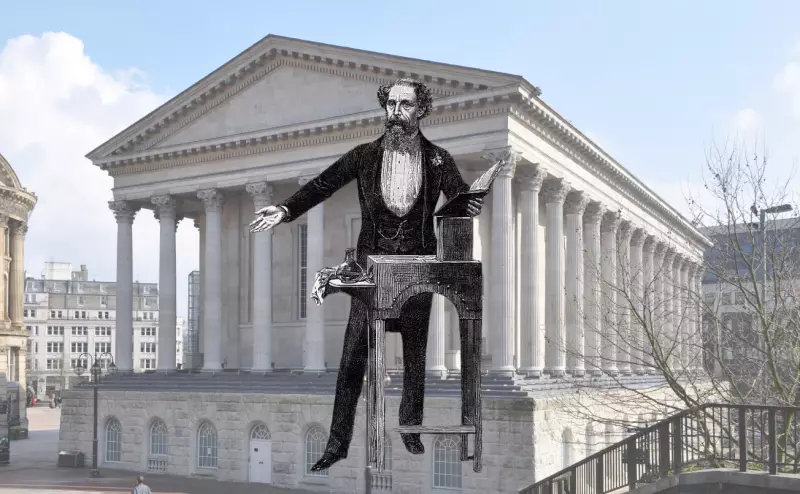
Long before gift subscriptions, Birmingham received a different kind of literary present. 172 years ago this week, on 27, 28, and 30 December 1853, Charles Dickens chose Birmingham's Town Hall for the first-ever public readings of his beloved festive tale, A Christmas Carol. The stage was thrice packed for the performances, which lasted over three hours each night.
This was no accident. According to local historian and Dickens expert Professor Carl Chinn, the author was "a great friend" of the town. Dickens first visited in November 1838 as a political reporter for London's Morning Chronicle. He was instantly captivated by its chaotic energy, describing it as "a town of dirt, ironworks, radicals, and hardware." His debut novel, The Pickwick Papers, features Mr. Pickwick's journey into Birmingham via the Bristol Road and Five Ways, marvelling at the "clash of hammers and rushing of steam."
This visit sparked a decades-long bond. Birmingham's lively industry, political radicalism, and determined working classes "engrossed him," says Chinn. Dickens spent time in Digbeth, Deritend, and a destitute area known as "The Gullet," near today's law courts, even rumoured to have dressed as a poor man to better understand the residents. His empathy for the poor was profound, and they adored his serialised stories, often clubbing together to buy copies.
A Gift in Return: The Readings that Built a Institute
The affection was mutual. So much so that in January 1853, grateful Brummies fundraised to present Dickens with a diamond ring and a silver salver at the Society of Artists on New Street. Touched, Dickens promised a gift in return: he agreed to raise funds for the Birmingham & Midland Institute, an accessible education centre, by reading A Christmas Carol, but only if working-class people could afford tickets. On the final night, the poorest were admitted for just six pence.
Professor Chinn notes that Dickens's mimetic abilities were so powerful that on that last night, the working-class audience "almost rent the roof as they cheered." Dickens would later become President of the Institute in 1869. His connection to the city also influenced The Old Curiosity Shop, where characters flee to Birmingham via its canals.
Modern Malignancy vs. Dickensian Spirit
Professor Chinn argues that Birmingham today could use a friend like Dickens. The city faces undeniable challenges, including drastic council cuts, a bins dispute, worklessness, and a sluggish regional economy. Yet outsiders often arrive to exploit a narrative gap, says Chinn, criticising migration and promoting nationalism by focusing solely on deprivation.
He cites Conservative MP Robert Jenrick's erroneous description of Handsworth as a "slum with no white faces," and other media claims about Erdington lacking community—assertions robustly challenged by local journalism. "We do not fit into their version of England… Birmingham is a diverse city," Chinn states.
Instead of this cynical view, Chinn urges celebration of Birmingham's enduring strengths: its world-class manufacturing, like Brandauer and Sertec; its cultural legacy birthing heavy metal and bhangra; and its literary heritage, which includes not only Tolkien but also Washington Irving beginning Sleepy Hollow here.
Earlier this month, a blue plaque was unveiled at Town Hall to commemorate Dickens's 1853 readings, funded partly by B:Music. However, council arts funding is set to be fully withdrawn next year, threatening venues like The Crown, where Black Sabbath first played.
Chinn believes the city cannot wait for another single benefactor like Dickens. "What Dickens liked is the way people in Birmingham got on with things," he says. The fight to save libraries and public buildings now falls to Brummies themselves. In that spirit, supporting thoughtful, local journalism that connects people to the true narrative of their city remains a powerful act—a modern gift that keeps on giving.