Skywatchers in Birmingham and across the UK can witness the total solar eclipse on April 8, 2024, thanks to live streams from NASA and other sources. The eclipse will be visible in totality only along a narrow path across North America, but viewers worldwide can watch the event unfold in real time online.
What is the April 8 solar eclipse?
A total solar eclipse occurs when the Moon passes directly between the Sun and Earth, completely blocking the Sun's light for a few minutes. The path of totality on April 8 will stretch from Mexico through the United States and into Canada, with major cities like Dallas, Indianapolis, and Montreal experiencing darkness during the day.
According to NASA, the eclipse will begin at 11:07 a.m. EDT (4:07 p.m. BST) and end at 4:52 p.m. EDT (9:52 p.m. BST). Totality will last up to 4 minutes and 28 seconds in some locations, making it one of the longest total solar eclipses in recent history.
How to watch the eclipse livestream
For those unable to travel to North America, several organizations will offer live coverage. NASA will provide a multi-hour stream featuring views from telescopes along the path, expert commentary, and scientific demonstrations. The stream begins at 1 p.m. EDT (6 p.m. BST) and runs until 4 p.m. EDT (9 p.m. BST).
Other options include the European Space Agency's (ESA) live feed, which will showcase the eclipse from a satellite perspective, and the Virtual Telescope Project's webcast, which will feature commentary from astronomers. All streams are free to access via official websites and YouTube channels.
What time is the eclipse in the UK?
Although the UK will not experience totality, a partial eclipse will be visible in western parts of the country. In Birmingham, the Moon will cover about 20% of the Sun at the peak, which occurs at approximately 7:55 p.m. BST. The partial phase begins around 6:55 p.m. BST and ends at 8:51 p.m. BST.
However, the Sun will be very low on the horizon, and the eclipse may be difficult to observe due to buildings and trees. Skywatchers are advised to find a location with a clear western horizon, such as a park or hilltop.
Safety first: never look directly at the Sun
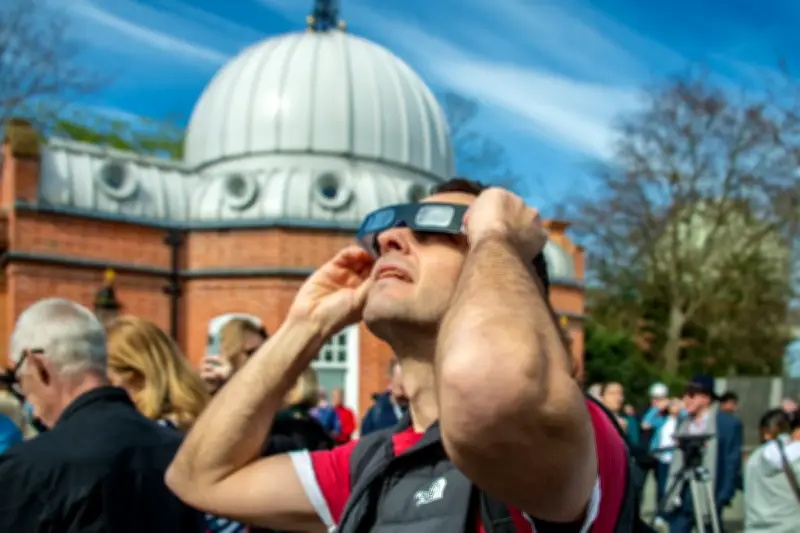
It is crucial to never look directly at the Sun without proper eye protection, even during a partial eclipse. The intense light can cause permanent eye damage. Use eclipse glasses that meet the ISO 12312-2 international safety standard, or use a pinhole projector to view the eclipse indirectly.
Binoculars and telescopes require special solar filters; never use them without them. For those watching the livestream, no special equipment is needed.
Why this eclipse is special
This total solar eclipse is notable for its long duration and wide path. It is also the last total solar eclipse visible from North America until 2044, making it a once-in-a-generation event for many observers. NASA will be conducting scientific experiments during the eclipse to study the Sun's corona and its effects on Earth's atmosphere.
For Birmingham residents, the livestream offers a chance to experience the spectacle without traveling thousands of miles. Mark the date in your calendar and tune in to catch the celestial show.