The UK's largest solar eclipse of the century will peak tonight just after 7pm, with more than 90% of the sun's surface covered across the country. The event begins at around 6pm, reaches its maximum at approximately 7.08pm to 7.13pm depending on location, and lasts for 16 minutes before the moon's shadow clears the UK.
Residents in Devon and Cornwall will experience the highest coverage, with up to 96% of the sun hidden. Other parts of Wales, Northern Ireland, the West Midlands, South West England, and western Scotland will see coverage between 92% and 94%. Maximum coverage in Cardiff will reach 93.24% at 7.13pm, while Belfast will hit 93.09% at 7.08pm. Eastern coastal areas like Norfolk, Yorkshire, and Aberdeenshire will see lower coverage, yet still experience more than 90% darkness.
Clear skies forecast for most of England and Wales
Met Office forecasts suggest clear conditions for most of England and Wales alongside warm weather exceeding 30°C. However, thicker clouds over Northern Ireland, Scotland, Cumbria, and parts of North East England may obscure the view slightly, depending on cloud depth.
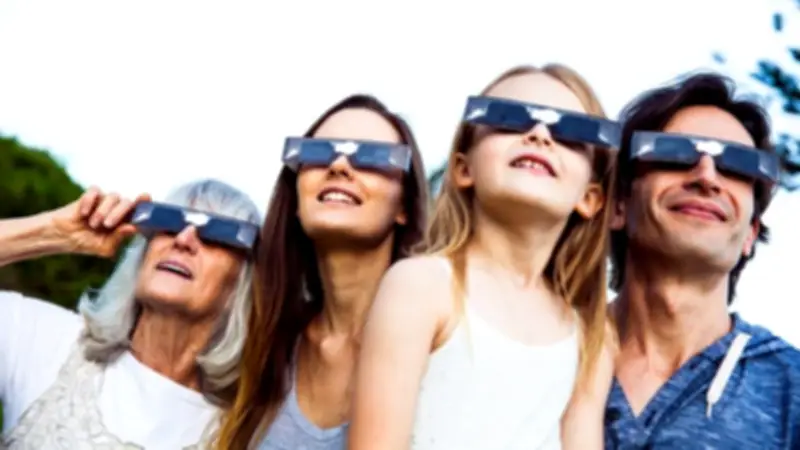
Skygazers will see a partial eclipse rather than totality, with experts warning against looking at the sun with the naked eye. Certified eclipse glasses or specialised telescopes are essential for direct viewing, though indirect methods such as a colander or a pinhole projector also work well.
Health experts warn of permanent eye damage
Looking straight at the sun without proper eye protection risks permanent eye damage, the UK Health Security Agency (UKHSA) has warned. Official guidance advises anyone unsure about the safety certification of their glasses to avoid using them and switch to an indirect method, such as a homemade pinhole viewer.
GP Dr Mariam Farshchi, at Pall Mall Medical, said the danger from looking at the sun without protection is far greater than most people realise, adding: “The human eye is not designed to look at the sun. Even a brief, unprotected glance during a partial eclipse can cause solar retinopathy, an injury to the retina caused by direct exposure to intense sunlight.
“The damage is often painless at the time, which is what makes it particularly dangerous. People may not realise they have injured their eyes until hours later, when symptoms such as blurred or distorted vision or blind spots can develop.
“There is no proven treatment that can reliably reverse established retinal damage. The sun may appear less bright during a partial eclipse, but this does not make it safe to look at directly. The remaining visible part of the sun is still bright enough to cause retinal injury.
“This is why it is essential to use appropriate eclipse viewing glasses that meet the ISO 12312-2 safety standard. Ordinary sunglasses, camera filters and improvised alternatives are not safe for looking directly at the sun.”
Eclipse glasses sell out before event
Sales of the specialist glasses have exploded, with many high street stores out of stock and online retailers unable to deliver before this evening's event. Although a total solar eclipse occurs somewhere in the world approximately every 18 months, UK watchers will have to wait until 2081 for another partial eclipse of this magnitude.
An interactive postcode lookup tool is available to help people find out when the event reaches its peak in their neighbourhood, ensuring they know precisely when to look up from their garden to watch the partial shadow (penumbra) pass.