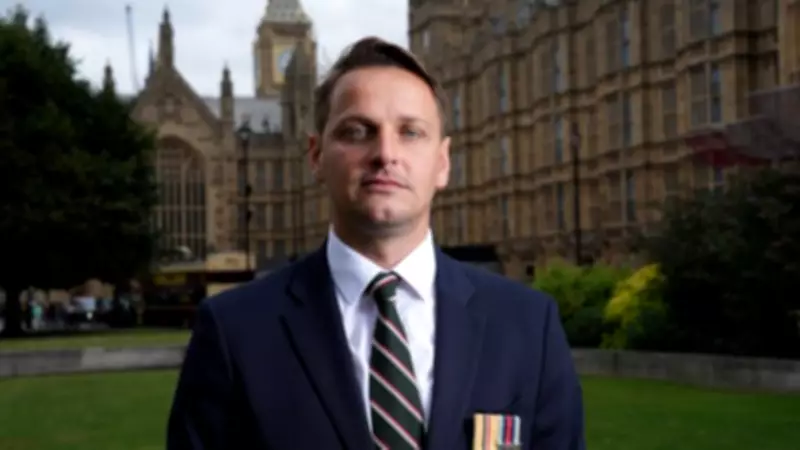
MP Launches School Debate Project to Engage Youth in Political Discourse
Politics often suffers from a negative reputation among young people, perceived as distant, uninteresting, or dominated by loud arguments on television. To address this, Mike Tapp MP has introduced a new initiative called Tapp into Politics, a series of classroom debates designed to bring political discussions directly to secondary school students.
Bringing Politics to the Classroom
The project aims to inspire hope and engagement by allowing pupils to tackle real political questions, with Tapp chairing the sessions himself. Instead of traditional lectures, the focus is on listening and encouraging students to argue, disagree, and articulate their reasoning. In an era of quick opinions and short attention spans, the goal is to demonstrate that political issues are complex and require careful consideration from multiple perspectives.
First Debate: Social Media Ban for Under-16s
The inaugural session took place at Dover Girls Grammar School, where students debated whether social media should be banned for individuals under 16. Contrary to expectations of a defense of platforms like TikTok and Instagram, many pupils raised their hands in favor of a ban. They spoke openly about the pressures of social media, including unrealistic standards, constant comparisons, and the inability to disconnect. This discussion highlighted that the younger generation may be more aware of the dangers of screen time than often assumed.
Second Debate: Lowering the Voting Age
A subsequent debate centered on the Representation of the People Bill, which proposes lowering the legal voting age to 16. The session featured a strong and respectful exchange of arguments, impressing Tapp with the students' ability to engage thoughtfully with opposing views. Both pupils and teachers found the experience enjoyable and enlightening.
Building Essential Skills
Tapp into Politics emphasizes skill development over providing answers. Participants learn to structure arguments, listen respectfully, and reconsider their positions based on evidence. The project fosters an environment where disagreement can lead to constructive dialogue rather than conflict, showing that complex problems deserve nuanced responses.
Empowering Young Voices
Tapp noted that discussions become particularly thoughtful when students feel their opinions are valued. Giving young people the space to explore significant questions without imposing correct answers is a quietly radical approach. The project will continue in secondary schools across Dover and Deal until the summer, potentially offering valuable political lessons that emphasize listening as the foundation of democracy.