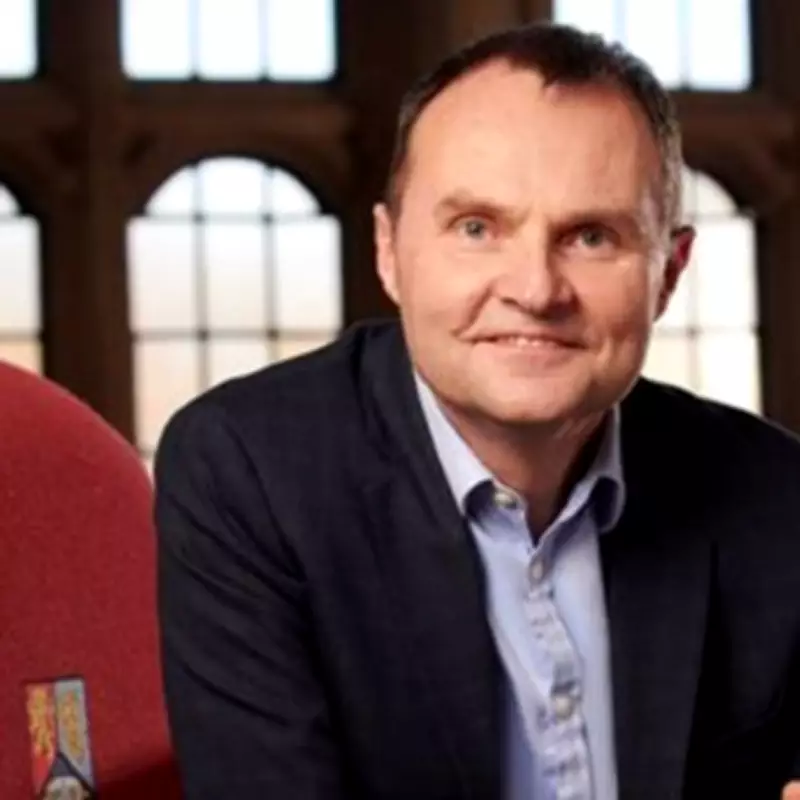
University of Birmingham Vice Chancellor's Student Loan Remarks Spark Outcry
University of Birmingham staff and students have strongly condemned recent comments made by Vice Chancellor Adam Tickell regarding student loans, labeling them as 'dangerous' and 'elitist'. The controversy erupted after Tickell addressed a conference in London, where he called for a radical review of the higher education funding system.
Controversial Proposals on Loan Eligibility
During his speech, Tickell questioned whether students without the best A-levels or equivalent qualifications should be eligible for government student loans at all. He stated, "We are getting students without a single A-level or equivalent getting access to the student loan book," adding, "We're investing so much money in people who … are not really capable of graduating."
Tickell argued that the current system is failing all parties involved. "We have a system where more state money goes in, students are more indebted and universities are on the brink of failure," he told the conference. "In terms of the taxpayer, the provider and the student, the system just isn't working … I don't think tweaking the margins will really address things."
Immediate Backlash from University Community
The Vice Chancellor's comments triggered an immediate and forceful response from his own institution. The University of Birmingham branch of the University and College Union (UCU) issued a statement describing Tickell's remarks as 'dangerous' and accusing him of attempting to return the university to its elitist roots.
The UCU statement argued that restricting access to student loans based on A-level status would "significantly worsen existing inequalities in higher education and in the wider region." They emphasized that "students who come to university without A-levels are disproportionately working-class, care-experienced, disabled, mature and from racially minoritised communities."
The union specifically rejected the implication that students entering through non-traditional pathways are "not really capable of graduating," stating that "A-level outcomes are not a neutral measure of ability; they reflect deep-seated inequalities in schooling, income, geography and racism rather than innate potential."
University's Response and Widening Participation Commitment
In response to the growing controversy, the University of Birmingham issued a statement reaffirming its commitment to widening participation. The university highlighted its nationally recognized fair access scheme, established in 2000, which aims to ensure that "able students, regardless of background, can fulfil their academic potential by studying at university."
The university also noted that the UCU's statement didn't fully reflect the Vice Chancellor's position, explaining that he believes many qualifications beyond A-levels can prepare students to thrive at UK universities. However, they acknowledged his view that "the funding model for higher education is not right for students, universities, or the taxpayer and needs to be reviewed."
Calls for Collaborative Reform
Birmingham UCU has called on the university to "reaffirm its commitment to widening participation and to distance itself from any policy changes that would restrict loan access for students without A-levels." The union urged the Vice Chancellor and sector leaders to work with staff, students, and trade unions on funding reforms that "tackle, rather than entrench, educational inequality."
The debate highlights ongoing tensions within higher education regarding access, funding, and equality of opportunity, with the University of Birmingham now at the center of a national conversation about who deserves support to pursue university education.