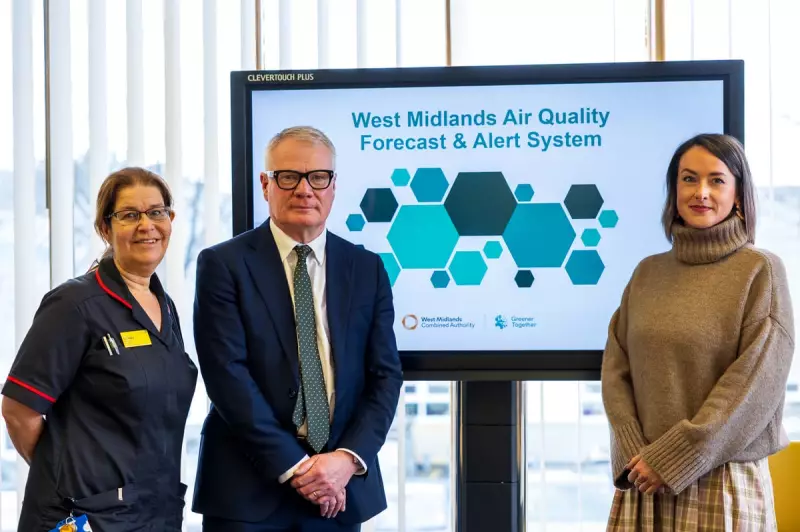
The West Midlands has launched its first-ever free air quality warning system, providing real-time alerts to residents as the risks from air pollution continue to rise. From this week, people across the region can register to receive immediate warnings via text, email, or voicemail when pollution levels become dangerous.
How the New Alert System Protects Residents
Operated by the West Midlands Combined Authority (WMCA), the service allows people to sign up on the Clean Air West Midlands website. Subscribers will receive direct notifications with practical advice on how to protect themselves during periods of poor air quality. This initiative is seen as a critical tool for the estimated 2,300 people in the region who die prematurely each year due to illnesses linked to air pollution.
The system is specifically designed to aid individuals managing long-term health conditions such as asthma, coronary heart disease, and lung cancer. As well as providing minute-by-minute local air quality readings, the alerts will offer guidance on longer-term actions residents can take to reduce their exposure to harmful pollutants where they live and work.

Technology and Action Behind the Warnings
The forecast and alert service is powered by an extensive network of 90 air quality sensors installed at key locations including outside homes, schools, businesses, hospitals, and sports centres. This network provides the most precise, near real-time air quality data ever collected in the West Midlands.
Alerts will be triggered when levels of microscopic particles from sources like wood burners, vehicle tyres, construction sites, and factories exceed safe thresholds set by the World Health Organisation. The system will also warn of high concentrations of nitrogen dioxide, primarily emitted from roads and industrial sites.
Leadership and Long-Term Strategy for Cleaner Air
Mayor of the West Midlands, Richard Parker, stated: “Dirty air has a devastating effect on lives. It’s simply not acceptable that every year 2,300 people living in our region die prematurely because of air pollution, but we can change that.”
He emphasised that the warning system gives communities the tools they need to protect themselves while broader action is taken. “We’re taking direct action to improve our air with a growing fleet of electric buses, hundreds of miles of new walking and cycling routes, and by restoring nature,” Parker added. “We’re transforming our towns and cities into greener, cleaner, healthier places for today and generations to come.”
The move has been welcomed by clean air campaigners and NHS lung health experts, who see it as a vital step in reducing the public health burden caused by pollution. The initiative represents a significant shift towards empowering residents with the data needed to make informed decisions for their health and wellbeing.