
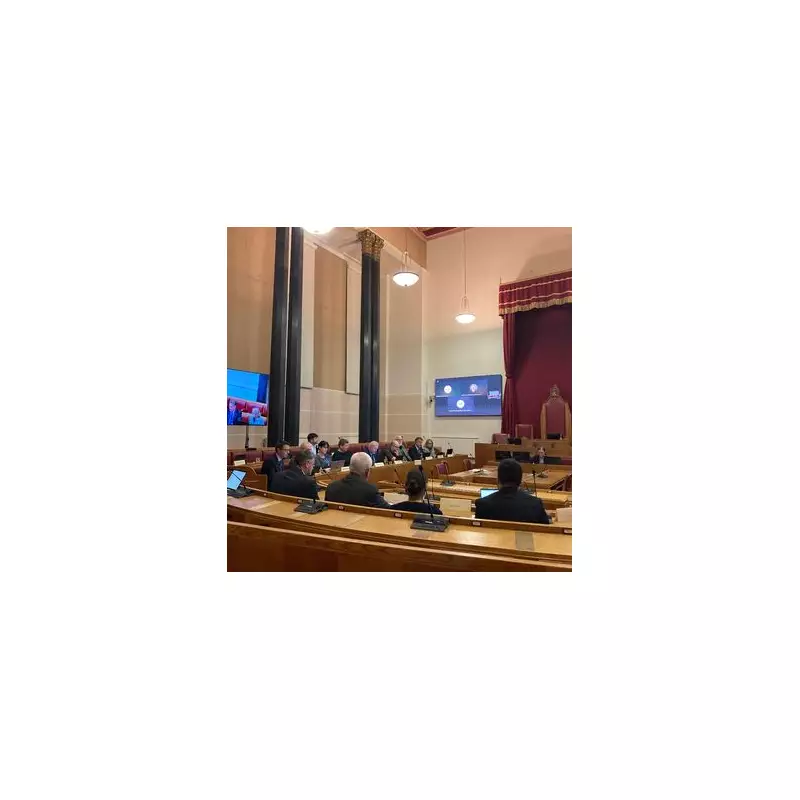
A significant reduction in Dudley Council's carbon emissions has been met with a stark warning about potential 'false accounting' on climate progress.
Council Reports Major Emissions Drop
At a cabinet meeting in December 2025, council officials revealed that carbon dioxide emissions fell by 17 percent during the 2024/25 period. The authority was responsible for 10,978 tonnes of CO2, down from 13,209 tonnes the previous year.
Councillor Ed Lawrence, the cabinet member for transformation, attributed the decrease to the rationalisation of the council's property portfolio and improvements in energy efficiency. He highlighted upgrades to electrical systems, heating, and notably, street lighting.
"To maintain the momentum we are going to continue to keep costs under review as well as identify new initiatives and opportunities," Cllr Lawrence stated.
LED Lighting Drive Delivers Results
A key contributor to the savings is a major project to replace traditional street lights with LED alternatives. Council reports confirm the programme is ahead of schedule, with a target completion date of December 2025.
By the end of July 2025, a total of 19,959 new lanterns had been installed. This is significant as street lighting alone accounts for 9.5 million kWh of energy and 2,100 tonnes of CO2 emissions annually.
A Caution on 'Offloading' the Carbon Burden
While welcoming the overall reduction, Councillor Kathy Bayton issued a critical note of caution. She argued that part of the improvement stems from selling council-owned buildings, which merely transfers the carbon footprint rather than eliminating it.
"When we are talking about rationalising our council estate, what we mean is selling off our buildings which then improves our own carbon footprint," Cllr Bayton explained. "Those buildings then go into private hands... and the carbon footprint is likely to go up."
She described the practice as a form of "false accounting", where the council's official figures decline while overall emissions from the borough may not.
"While the council's footprint going down is to be welcomed, it is kind of false accounting because ours is coming down while the private sector is going up," she concluded.
The debate highlights the complex challenge of measuring true climate progress at a local level, where operational changes can obscure the wider environmental impact.