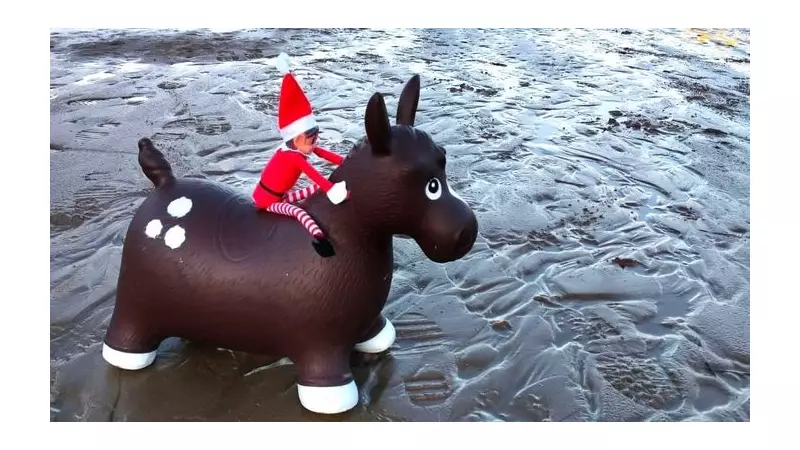
A festive social media campaign featuring a mischievous 'Naughty Elf' on the Sefton Coast has captured public attention, but it carries a profoundly serious message about protecting one of the UK's most important natural landscapes.
The Protected Landscape Under Pressure
The campaign, run by Green Sefton, shows the elf engaging in activities visitors are asked to avoid across the sensitive dune system and shoreline between Crossens and Crosby. This area holds a formidable array of protective designations, reflecting its exceptional ecological value.
Most of this coastline is protected as a Site of Special Scientific Interest (SSSI), a Special Protection Area (SPA), or a Special Area of Conservation (SAC). It is also designated as an internationally important Ramsar Wetland. Further conservation status comes from Local and National Nature Reserves, plus reserves managed by the RSPB and the Lancashire Wildlife Trust.
Why the Rules Are Not Arbitrary
The list of requested behaviours for visitors is not a random set of restrictions. It is founded on decades of sand dune management expertise and a deep understanding of the geomorphological forces that have shaped this coast over millennia.
Green Sefton, alongside partners including Natural England, the National Trust, Lancashire Wildlife Trust, RSPB, and private landowners, collaboratively manages these habitats. The rules are designed to ensure vulnerable species can continue to thrive despite mounting pressures from climate change, rising visitor numbers, and invasive species.
These guidelines are underpinned by byelaws, the aforementioned legal protections, and a specific Public Space Protection Order (PSPO) for the coast, created following public consultation.
How Visitors Can Help Protect the Coast
While everyone from naturalists and dog walkers to kiters and horse riders is welcome, responsible behaviour is essential. Key requests from the management partnership include:
- Keeping dogs under control, cleaning up after them, and preventing them from chasing wildlife or entering flooded pools.
- Avoiding the beach on horseback two hours either side of high tide and staying out of the dunes.
- Not lighting fires or barbecues, camping, or flying drones without authorisation.
- Using on-site bins or taking all litter home.
Adhering to these measures minimises disturbance and damage to precious dunes, beaches, saltmarshes, and coastal woodlands. It also ensures the enjoyment of the coast is not ruined for others by the actions of a few.
The core mantra for the Sefton Coast – "Respect, protect and enjoy" – has never been more critical. As the campaign concludes, whether you're a naughty elf or a responsible visitor, safeguarding this spectacular landscape is no laughing matter.