
New research has revealed a staggering scale of waste in British households, with over 200 million items of children's clothing being discarded every year. The study, commissioned by technology company Epson, paints a concerning picture of the nation's throwaway fashion habits.
The Mountain of Discarded Children's Clothes
The figures are hard to comprehend. The UK throws a collective 216 million pieces of children's clothing into landfill each year. To visualise this waste, if each item was folded to 1cm thick and stacked, the pile would reach an astonishing 2,160,000 metres high. That is 244 times the height of Mount Everest (8,848m).
The survey of 7,000 parents across seven European nations found that Britain's 12.7 million children are at the centre of this issue. On average, each child has 17 items binned annually. British parents dispose of nearly twice as many garments as parents in France, who throw away just nine items per child each year.
Buying Habits and the 20-Wear Problem
The study delved into the spending and usage patterns behind the waste. It found that the typical British parent with children aged 1-16 spends £794.60 a year on their child's wardrobe. Alarmingly, 12% of parents buy new clothes for their children every single week.
Despite this constant consumption, the lifespan of a garment is short. The average item of children's clothing is worn just 20 times before being thrown away or passed on. Convenience often trumps sustainability, with 35% of parents admitting they bin clothes simply because they lack the time to dispose of them another way. Furthermore, the research highlighted a festive waste problem, noting that children receive around nine clothing items at Christmas, three of which will never be worn.
Innovation and Collaboration for a Sustainable Future
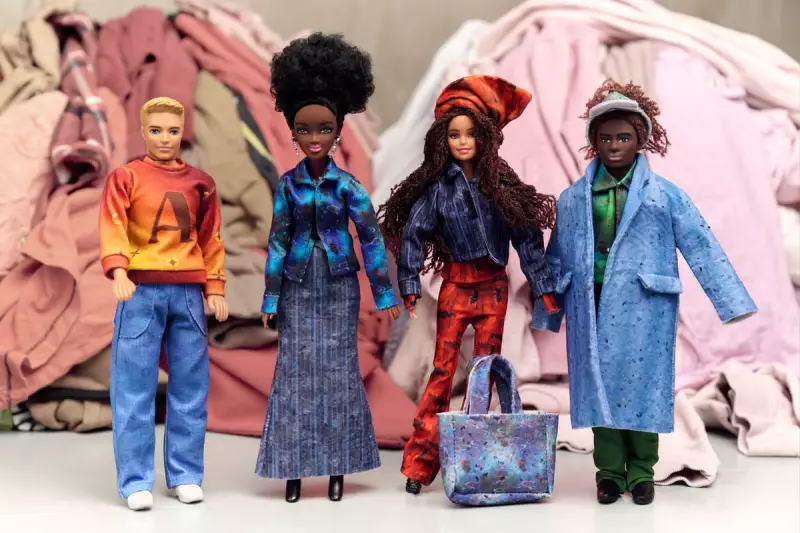
In response to these findings, Epson collaborated with acclaimed fashion designer and sustainability advocate Priya Ahluwalia. Together, they created 'Fashion Play', a doll-sized collection designed to showcase how technology can address waste.
The miniature garments were produced from textile waste using Epson's Dry Fibre Technology and printed with their water-saving Monna Lisa digital textile printer. This project serves as a tangible example of circular innovation in the fashion industry.
Maria Eagling from Epson stated: "Fashion offers every age a creative avenue for self-expression, but we all have a part to play in making better choices... While there are simple actions consumers can take... we wanted to show how innovation like Dry Fibre Technology can also help."
Designer Priya Ahluwalia, whose work is heavily influenced by witnessing textile waste in India and Nigeria, commented on the collaboration: "I have since endeavoured to work in a way that is better for people and the planet, especially in the global south."
The research underscores a significant gap between intention and action. While 66% of parents claim to consider sustainability for their own clothes, 48% admit to choosing the quickest, easiest way to get rid of their children's old garments. The challenge now is to bridge this gap through consumer education, better recycling infrastructure, and continued technological innovation.