
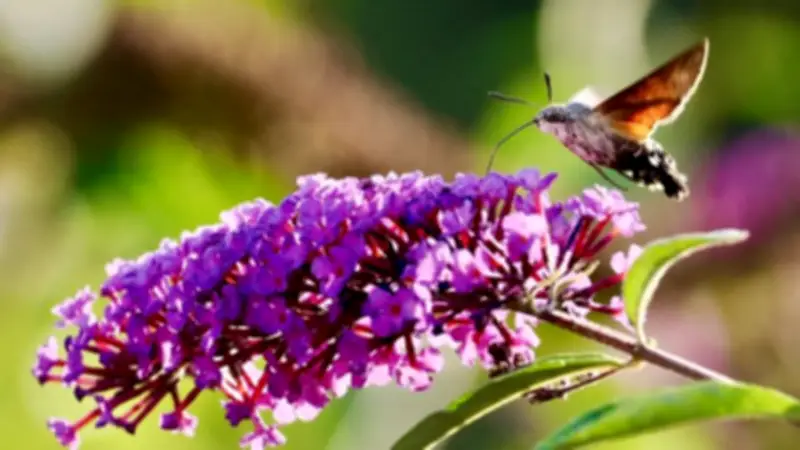
Cooler nights and shortening days may signal the end of summer, but for wildlife watchers on the Sefton Coast there is plenty to celebrate. The prolonged heatwaves and absence of rainfall that dominated the season have proved challenging for some species, yet others have thrived — none more so than the Hummingbird Hawk-moth.
According to John Dempsey of Green Sefton, the Sefton Council service that manages the coastline, parks and green spaces, this enigmatic species has been growing progressively commoner for the last decade, but numbers appear to have rocketed this year.
A Changing Climate Brings New Residents
Once an autumn arrival from southern Europe, Hummingbird Hawk-moths are now widespread in the UK, with the population growing year on year as the climate warms. The species behaves much like a hummingbird, hovering with remarkable control as it probes flowers for nectar using an impossibly long, thin proboscis.
This gives the appearance of a bill, while large well-defined eyes, black and white markings at the rear end, and a colourful flash of orange on the wings add to the impression of a tiny exotic bird. Although Hummingbird Hawk-moths are still smaller than the world’s smallest bird, the Bee Hummingbird, that species is confined to Cuba, and it is unlikely any wild hummingbird will ever cross the Atlantic.
Close Encounters with a Charming Moth
Probably because they are so preoccupied with guzzling nectar, Hummingbird Hawk-moths allow very close approach as long as the observer is slow and quiet, often feeding just centimetres away. When that near, you can even hear the buzzing of their whirring wings.
Dempsey observed one last week and noticed that its wings, usually a speedy blur, seem to rotate through 360 degrees, much like a real hummingbird, giving it excellent manoeuvrability. At about 80 wingbeats a minute, they are certainly zippy creatures, but their flight remains direct and controlled, and they can come to a sudden halt mid-air at a nectar-rich flower. It also means these little insects can turn on a sixpence, speeding away before you know it.
Where to Spot Them and What They Mean
Like many nectar-loving species, Hummingbird Hawk-moths adore Buddleia and Valerian, common plants in parks and gardens, and will also be attracted to Lavender, Phlox and Geraniums. Females need Bedstraws to lay their eggs.
They have long been considered harbingers of good luck, with the most frequently related example being a large swarm recorded crossing the English Channel by allied forces on D-Day in June 1944. At the time, people viewed this as an omen predicting the end of World War II.
Where they occur regularly, these moths have a set timetable — in Dempsey's garden they appear on the Buddleia around 8am, then disappear before putting in a shift from late afternoon to dusk. He advises that if you haven't seen one yet, don't worry — influxes of continental Hummingbird Hawk-moths take place into the autumn, especially on southerly winds, so there's plenty of time to connect with our very own hummingbirds this year.