Solihull Council has identified more than 70 green belt sites as potential grey belt, but stressed they will not automatically be developed. The findings come from an independent survey by consultants Arup, commissioned to inform the borough's emerging local plan.
What the assessment found
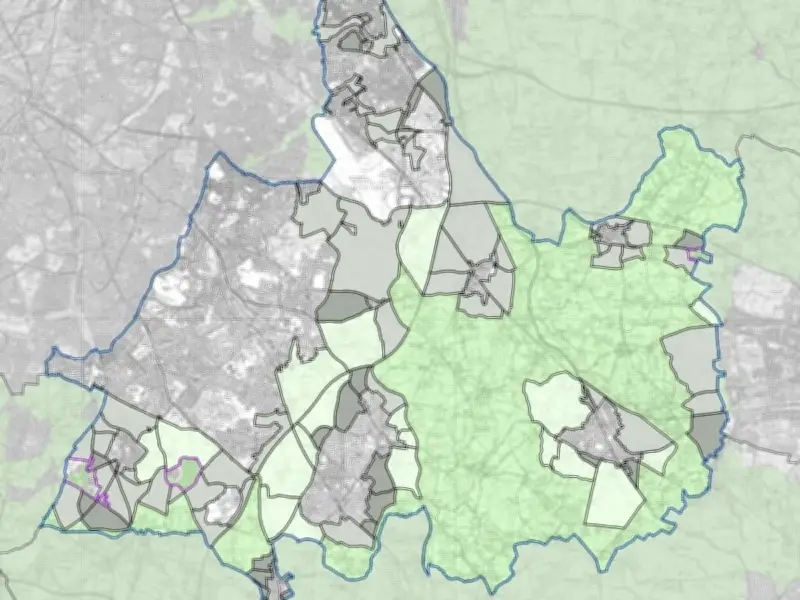
Arup's updated green belt assessment (GBA) examined 99 parcels of land across Solihull, focusing on areas next to large built-up zones, towns, and villages. The report identified 66 parcels making a strong or moderate contribution to green belt purposes, primarily located near Solihull/Shirley, Coventry, and towns like Knowle, Dorridge, Bentley Heath, and Balsall Common.
In total, 72 parcels were flagged as potential grey belt. Grey belt, introduced by the Labour government, refers to lower-quality, low-value portions of protected green belt land that could be suitable for development. The assessment noted that parcels around inset villages were largely identified as potential grey belt, despite scoring strongly for openness and safeguarding the countryside from encroachment.

Fundamental importance areas
Four areas were identified as having 'fundamental importance' within Solihull's green belt. Three lie within the Meriden Gap, the large area between Solihull and Coventry, and the fourth is south/southwest of Shirley. These areas are unlikely to be considered for development due to their critical role in preventing urban sprawl.
Council's stance on development
Solihull Council emphasised that the assessment is an evidence document, not a policy statement. A cover statement said: "It will be a policy decision in the emerging local plan which sites may be released." The document is also capable of being a material consideration in planning applications.
Councillor Andy Mackiewicz, cabinet member for climate change and planning, said: "This updated GBA is needed as an evidence document to inform our emerging local plan – it should not be viewed as setting council policy. Decisions about whether any sites should be released from the green belt to meet future development needs across the borough will be made through the local plan process."
Context and next steps
The review comes as Solihull faces a government target to build 8,500 new homes before 2029. The national push aims to deliver 1.5 million homes across England. The council has not invited comments on the GBA at this stage; feedback will be sought during the next local plan consultation. An independent inspector will later review the evidence.
Mackiewicz added: "The identification of potential grey belt land does not mean those areas are suitable for development. Nor does it mean that entire land parcels assessed as containing grey belt would automatically be considered for development."
Residents and interested parties are encouraged to review the GBA ahead of the next consultation phase to familiarise themselves with the content.