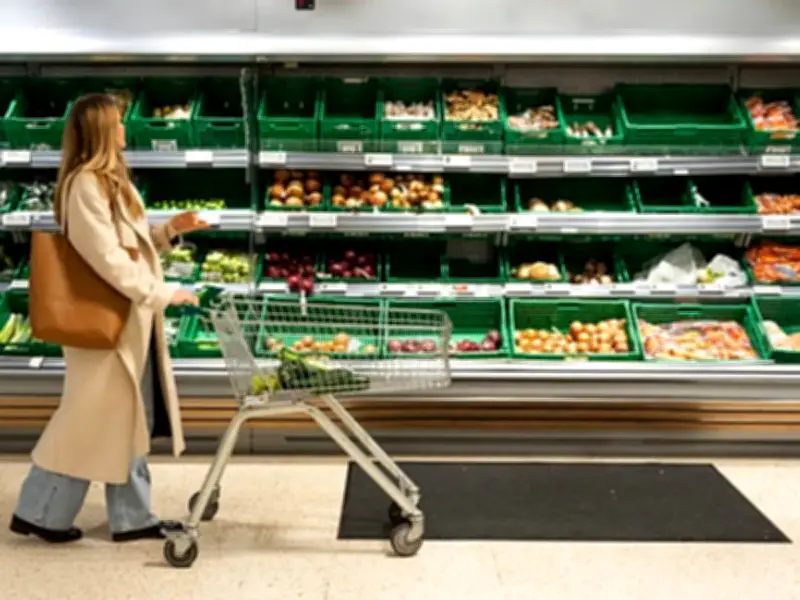
The Food Foundation has warned that UK shoppers face potential supply disruptions and price increases for apples, strawberries, blueberries, raspberries, and pears, as the country relies heavily on imports from nations that are vulnerable to climate change.
According to the charity, approximately 40 per cent of Britain's food is imported, including 80 per cent of its fruit and 47 per cent of its vegetables. This places the UK among the highest rates of reliance on imported fruit in Europe.
Of the top 20 countries the UK imports fruit and vegetables from most, 18 (90 per cent) are moderately to severely vulnerable to climate change, the Food Foundation said.

Five fruits grown in UK but self-sufficiency remains low
Of the UK's nine most purchased fruits, five can be grown domestically: apples, strawberries, blueberries, raspberries, and pears. However, the country remains under 40 per cent self-sufficient for four of those, meaning there is significant scope to increase home production.
The warning comes as part of a broader call for government action to reduce reliance on heat-stressed countries and to strengthen domestic food security.
Industry calls for policy certainty
Anna Taylor, executive director at the Food Foundation, said: “There is a risk [the impacts of climate breakdown] will drive up prices in the future, putting nutritious foods further out of reach for many, so it is important government takes action now to prevent this.”
Ali Capper, who runs an apple and hops farm in Worcestershire and chairs the British Apples and Pears trade body, said its members wanted to grow more fruit. Capper said: “To do so they need the certainty that good government policy can deliver – certainty on continued and increased access to the seasonal workers scheme; water for food; an agile planning regulation; competitively priced energy.”
Capper added: “Growers also need market certainty – long-term agreements and profitable returns.”
Vegetable self-sufficiency gaps
The Food Foundation says the UK could grow more of its top vegetables, including tomatoes, mushrooms, peppers, cucumbers, onions, broccoli, and green beans. However, only carrots reach high self-sufficiency at 94 per cent; all the others fall below 50 per cent.
There is currently a mismatch between UK domestic food production and dietary goals, according to the charity.
The Food Foundation is calling on the government to support farmers to grow more fruit and vegetables domestically and increase consumption, while also enabling climate adaptation, building resilience on farms, and strengthening local food systems and supply chains.