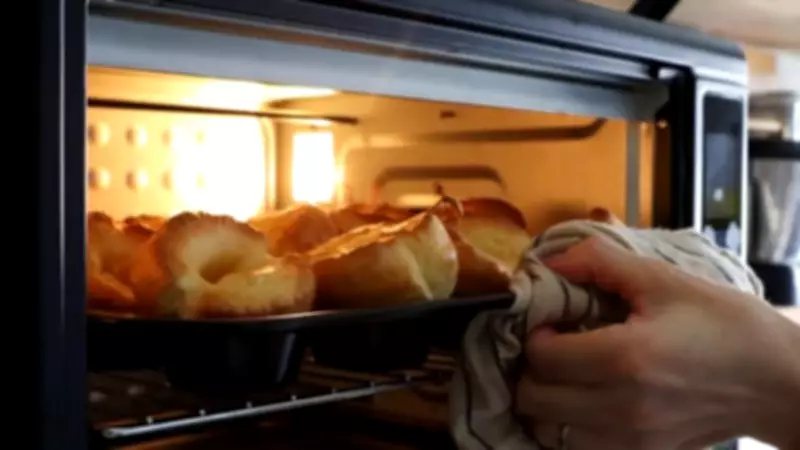
Often considered the crowning glory of a traditional British roast dinner, the Yorkshire pudding represents a true marvel of culinary engineering. When executed perfectly, it emerges from the oven as a golden, crispy-walled cathedral of batter. However, when things go wrong, it can transform into a disappointingly dense and doughy disc. If you have ever opened your oven door to find flat Yorkshire pancakes rather than proud, risen puddings, you may have overlooked one crucial scientific principle.
The Three Laws of Pudding Physics
Achieving that iconic rise is less about culinary luck and far more about understanding a few simple laws of physics. To successfully coax a Yorkshire pudding to climb the walls of its tin, you require three fundamental elements: steam, structure, and intense heat.
Rule One: The Perfect Ratio
Forget meticulously weighing every ingredient in grams. The most reliable method for guaranteeing a perfect rise involves using equal volumes of your core components. The easiest technique is to employ three identical glasses or cups. Crack your eggs into the first, fill the second with plain flour, and pour milk into the third until it reaches precisely the same level. This volumetric approach ensures the ideal balance for structure and lift.
Rule Two: Whisking and Resting for Structure
While a mini whisk might suffice for salad dressings or scrambled eggs, your Yorkshire pudding batter deserves superior treatment. Using a balloon whisk helps to incorporate significantly more air into the mixture, resulting in a lighter, more aerated batter that is primed to rise.
The subsequent step is one that many home cooks unfortunately skip, yet it is absolutely critical. Allowing the batter to rest for a minimum of 30 minutes—and ideally up to four hours—enables the starch molecules within the flour to fully swell and the gluten to relax. This process yields a smoother final texture and promotes a more stable rise that is less likely to collapse upon exposure to cooler air. While some bakers advocate for using chilled batter, room temperature batter frequently produces a taller, hollower pudding.
Rule Three: The Power of Hot Oil
The third and final tip for perfecting your Yorkies involves cooking them in shimmering, intensely hot oil or fat. When the cold batter makes contact with the searing hot fat, it triggers an immediate and powerful burst of steam. This steam acts as the essential 'engine' that forcefully pushes the pudding upward, creating its characteristic shape.
It is vital to use an oil with a high smoke point, such as sunflower or vegetable oil. For an authentic and richly flavoured result, beef dripping remains the undisputed champion. While olive oil may be delicious, its relatively low smoke point makes it unsuitable for this high-heat application. Additionally, investing in a heavy-duty muffin tin made from materials like non-stick carbon steel, which retains heat more effectively than thin aluminium, ensures the oil maintains its temperature when the batter is introduced.
The Ultimate Yorkshire Pudding Recipe
Ingredients:
- Equal volumes of eggs (for lift), plain flour (for body), and milk (for richness and moisture)
- A generous pinch of salt (to enhance the savoury flavour)
- Vegetable oil or beef dripping (for cooking)
Method:
- Combine your equal volumes of eggs, flour, and milk in a large bowl. Whisk vigorously until the mixture is mostly smooth; a few tiny lumps are perfectly acceptable.
- Leave the batter to rest on the worktop at room temperature for at least 30 to 60 minutes.
- Place approximately one teaspoon of oil or dripping into each hole of a sturdy muffin tin. Position the tin in a preheated oven at 220°C (425°F) for about 10 minutes, until the oil is visibly shimmering and hot.
- Quickly and carefully remove the tin from the oven. Pour the batter into the centre of each hot, oily hole, then return the tin to the oven immediately.
- Bake for 20 to 25 minutes. It is imperative not to open the oven door before the 20-minute mark, as this can cause the puddings to deflate.
Mastering these techniques transforms the humble Yorkshire pudding from a potential kitchen disappointment into a consistently spectacular centrepiece, worthy of any Sunday roast.