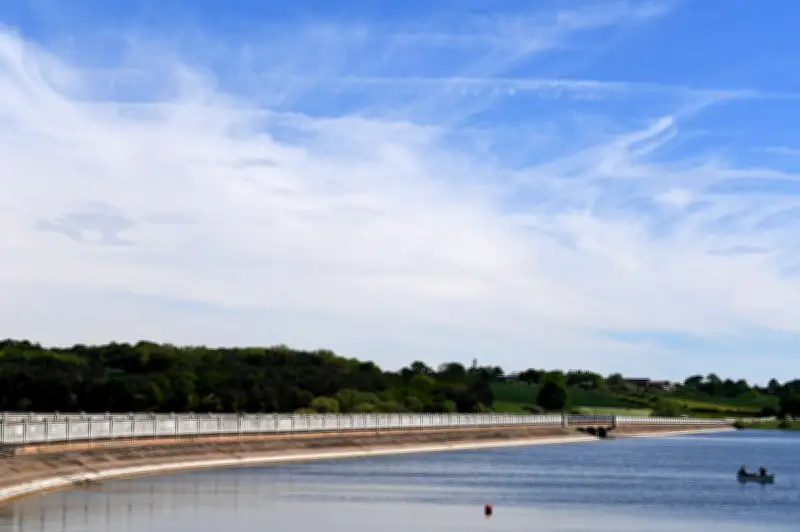
The Environment Agency has warned that a reservoir in the West Midlands is sitting at a notably low level, raising concerns about water security in the region. The announcement has sparked renewed calls for households and businesses to be more water-efficient, with officials keeping a close watch on whether conditions will deteriorate further.
What is known about the low reservoir
The agency, which manages water resources across England, said the reservoir's level is significantly lower than what is normally expected at this time of year. It is one of several sites being tracked as part of the agency's routine hydrological monitoring programme. While no official drought status has been declared, the low level has moved the issue up the agenda of regional water managers.
Reservoir levels are a critical indicator of the balance between available supply and demand. They are particularly important in the West Midlands because a substantial share of the region's public water supply comes from these stores. The current situation is a direct result of suppressed rainfall during the colder months, which are usually relied upon to recharge both surface and groundwater reservoirs.

Why the West Midlands is especially exposed
The West Midlands is among the most densely populated areas in the country, with more than 2.9 million people relying on its water infrastructure. Each person in England uses, on average, around 144 litres of water a day, according to industry estimates. That translates into a daily draw on regional resources of more than 400 million litres when businesses, schools, and public spaces are included.
Such enormous demand means that even small deficits in the natural replenishment of reservoirs can quickly become a problem. The current shortfall has been aggravated by a series of dry weather systems that have swept across the region over the past several months, leaving soils dry and rivers running below typical levels.
Monitoring and management actions
The Environment Agency is working in close co-operation with the region's water companies to review abstraction licenses and ensure that water is being taken in a sustainable manner. In many cases, temporary restrictions on spray irrigation can be introduced when river flows fall below their threshold, though none have been announced in relation to this particular incident yet.
Water companies are also undertaking their own preparatory steps, including enhanced testing of treatment works and contingency planning to manage any longer-term shortage. The agency has stated that the situation is being reviewed on a weekly basis and that further statements will be made if the reservoir continues to fall.
What people can do to help
Simple changes in everyday behaviour can add up to a significant saving. Turning off the tap while brushing teeth, fixing leaking toilets and taps, and using cistern displacement devices all help reduce unnecessary water loss. Outdoors, using a watering can instead of a hose and installing water butts to collect rain can further ease pressure on the supply system.
The Environment Agency and water suppliers have both emphasised that effective, early action is much more cost-effective than dealing with a full-scale water shortage. They also note that reducing water consumption reduces energy bills, as less energy is required to treat and pump water to homes.
Comparisons with previous dry spells
The low reservoir echoes conditions seen during the 2022 heatwave, when much of England faced prolonged dry spells and water restrictions were introduced in some areas. That year, some reservoirs plummeted to their lowest levels in decades, prompting a national drought committee to be convened. Although the current situation is not yet that severe, it serves as a reminder of how quickly water resources can be depleted when rainfall stays away.
Outlook for the coming months
The immediate outlook depends entirely on the weather. Forecasters at the Met Office are predicting a mixed pattern, with some rainfall expected but probably not enough to restore the reservoir to normal levels quickly. The Environment Agency will continue to update its water situation reports, which are publicly available to provide transparency about the developing trend.

If the dry weather persists, the region may see public communication campaigns ramped up, and the potential introduction of temporary use bans (often called hosepipe bans) cannot be completely ruled out, depending on how the hydrological picture evolves. For now, the message is clear: using water wisely is a shared responsibility.