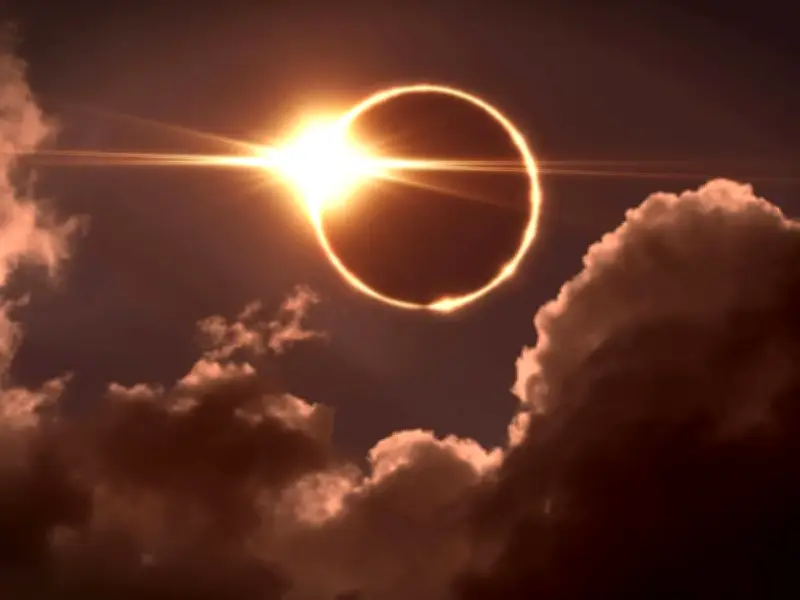
The solar eclipse on August 2, 2027, will be the second-longest total solar eclipse of the 21st century, with totality lasting an extraordinary six minutes and 23 seconds at its longest point, according to NASA. This rare celestial event will offer stargazers a unique opportunity to experience more than six minutes of complete darkness.
The eclipse will be visible across parts of southern Europe, North Africa, and the Middle East, including major cities such as Cádiz, Tangiers, Benghazi, Luxor, and Jeddah. The path of totality will pass through Spain, Morocco, Algeria, Tunisia, Gibraltar, Libya, Sudan, Egypt, Saudi Arabia, Yemen, and Somalia.
An Exceptional Duration in the 21st Century
This eclipse ranks as the second-longest of the century, making it one of the most breathtaking astronomical spectacles of our time. Those who miss it will face an extraordinarily lengthy wait for a comparable event. The next total solar eclipse surpassing the duration of the 2027 occurrence is not anticipated until 2114, meaning today's adults and, in many cases, their children are unlikely to witness another of equal length.

During a total solar eclipse, the Moon moves directly between the Earth and the Sun, entirely obscuring the Sun's bright disc for observers positioned along a narrow corridor. For those within the path of totality, daylight can momentarily give way to darkness as the sky dims and the Sun's outer atmosphere, known as the corona, becomes visible surrounding the Moon.
Where to See the Full Effect
The 2027 eclipse will be particularly remarkable owing to its exceptionally prolonged period of totality. However, the maximum duration of six minutes and 23 seconds will only be observable from a particular section of the eclipse's trajectory, while other areas will witness a briefer period of darkness. For those watching from outside the path, the Moon will still cross in front of the Sun, creating a partial solar eclipse, but the spectacular phase of total darkness will not be seen.
As the date approaches, astronomers and enthusiasts alike are expected to make travel plans to locations within the path of totality to experience this once-in-a-lifetime event. With such a long totality and a wait of nearly nine decades for a longer one, the 2027 eclipse is set to be a highlight for skywatchers worldwide.