
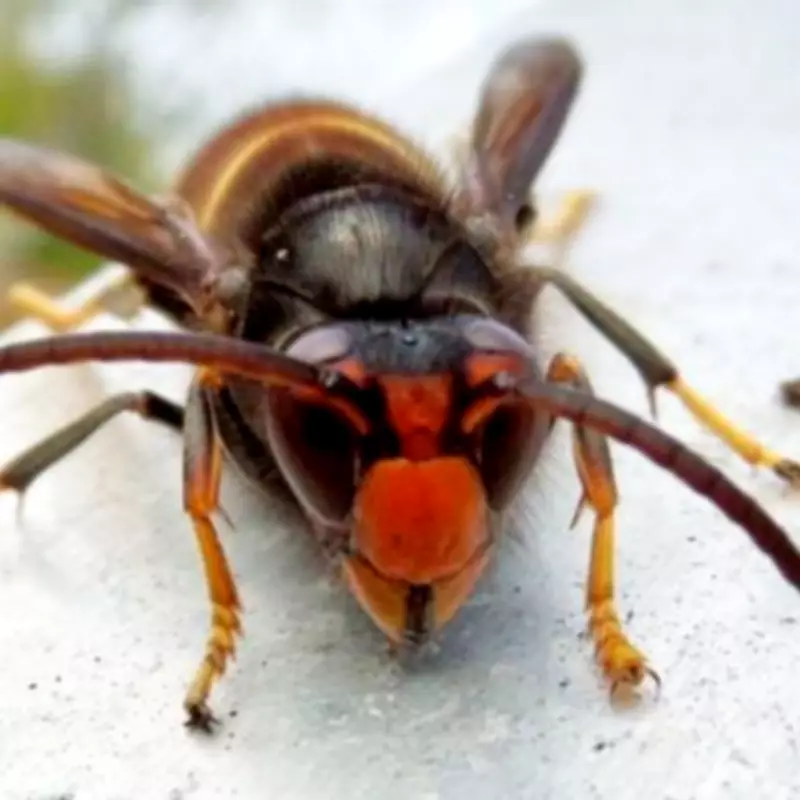
Asian Hornets Invade UK Town via Motorway Transport, Sparking Public Health Alert
Basingstoke is currently under threat from an invasion of Asian hornets, which are reportedly hitching lifts on cars and vans traveling up the M3 motorway from southern cities. According to experts and local beekeepers, this poses a significant public health issue and a severe risk to biodiversity in the area.
Beekeepers Warn of Impending Crisis
Steve Delo, secretary of the Basingstoke and District Beekeepers Association, has issued a stark warning about the situation. He stated, "There’s a huge spike of these nasty, nasty creatures arriving in south Hampshire, and we are expecting all hell to break loose." Delo emphasized that the hornets are actively using vehicles as a means of transport, moving northward into Basingstoke along the M3 corridor.
He urged the public to remain vigilant but cautious, advising, "We want people to keep an eye out as this is a public health issue. Whatever you do, don’t approach a nest – if you see one report it but don’t go poking around." However, he also stressed that ignoring the problem is not an option, as these invasive species are consuming local biodiversity at an alarming rate.
Health Risks and Historical Context
The venom of Asian hornets is described as a potent toxin that causes immediate pain and shock upon stinging. Steve Delo highlighted the severity by noting, "Their venom is a toxin and it will hurt! It produces an immediate pain and shock. There have been fatalities on the continent." This underscores the urgent need for public awareness and action to mitigate risks.
Asian hornets first appeared in Europe in 2004, likely transported accidentally in cargo from Asia to France. Since then, they have spread rapidly across western Europe, becoming an established invasive species in many regions. Their arrival in the UK marks a concerning expansion of their range.
Official Response and Eradication Efforts
Tracy Wilson, head of operational delivery at the Animal and Plant Health Agency (Apha), addressed public concerns about the hornets' establishment in the UK. She explained, "The public are seeing more Asian hornets around. So there is an assumption or a feeling that they must be established, but that isn’t the case. There are some surviving – but they’re not thriving in the UK, and we continue with eradication."
Leading the national response is Peter Davies, who runs the command centre dedicated to combating the Asian hornet threat. He described his role, saying, "In effect, I’m the incident commander to tackle the hornet. We have a forward operating base at the hotel so we can get anywhere in Kent quickly, because that’s where we’ve had the most incursions." This strategic setup allows for rapid deployment to areas most affected, such as Kent, which has experienced the highest number of hornet sightings.
The situation in Basingstoke serves as a critical reminder of the broader environmental and health challenges posed by invasive species. Authorities continue to monitor and respond to incursions, emphasizing the importance of public cooperation in reporting sightings without direct intervention.