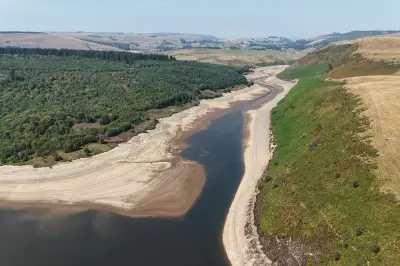
The blistering temperatures of recent heatwaves present massive challenges to a range of species that rely on the dune system. Pools shrink through evaporation almost before the eyes when the temperature races over 30 degrees. The sheltered dips of the dune system are often a good ten degrees warmer than the beach and surrounding landscape and quickly become an inhospitable and hazardous environment for all but the most heat-tolerant specialists.
Impact on Young Amphibians
These conditions are bad news for young amphibians including Natterjacks and Great Crested Newts as their “nursery” wetland habitat simply disappears. It is more important than ever to keep dogs out of pools to help these protected species.
Dragonflies Thrive in the Heat
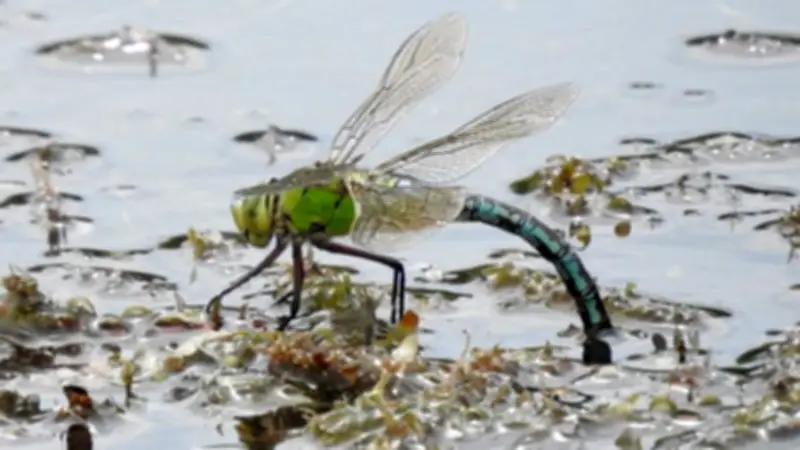
Others however flourish in the heat. The hotter it gets, the more dragonfly populations – and species diversity – soars. From Crosby to Ainsdale, the populations of several species are booming especially around deeper waterbodies. As the temperatures raced up into the mid-30s I counted no fewer than 17 Emperor Dragonflies on the Sands Lake at Ainsdale, many ovipositing females. Our largest dragonfly, Emperors are dramatic insects deserving of their name. They patrol a few feet above the surface looking for unwary prey, which often includes other dragonflies.

Southern Species Move North
The heat has brought others to the coast – Lesser Emperors, dark-bodied with distinctive blue saddles have been seen at a number of sites, and Pete Kinsella has recorded large numbers of Red-veined Darters at Crosby Coastal Park. The area around the small boating lake is the best place to look for these gorgeous beasts. These are beautiful species of the south, moving north as climate change makes our region more suitable while their traditional ranges become too hot.
Norfolk Hawker: A Remarkable Arrival
Most exciting of all is the increase in records of Norfolk Hawker, an enigmatic creature in Britain that was restricted to three ditches in Norfolk when I was a youngster. It relied on ditches that contained the rare aquatic plant Water Soldier and was declared endangered more than two decades ago. It was the ultima thule of dragonflies, but something exciting has been happening with Norfolk Hawker over the last few years. The species has been pushing steadily north and in 2022 a population became established on nature reserves around Wigan. This year it appeared on the Sefton Coast, with reports from Crosby to Ainsdale.
This brown dragonfly with distinctive green eyes and clear wings is hyper-active, rarely settling to give good views, so you have to be fast to pick one out. I was lucky to get reasonable views of one last week (albeit out of our area at Marton Mere in Blackpool), so that I could even see the yellow marking at the back of the head, an ID clincher. What makes the Norfolk Hawkers reaching our region so intriguing is that they maybe insects from the continental population, presumably “leap-frogging” the small Water Soldier-loving population of the fens. Not to be confused with Brown Hawkers which are common here, larger and have wings the colour of Lucozade, the Norfolk Hawkers are yet another example of how climate change is pushing species northwards. Expect to see more of them over the coming years.
John works for Green Sefton, the Sefton Council service which brings together the Coast & Countryside, Parks & Greenspaces and Grounds Maintenance teams for a joined-up approach to the vital management, development and oversight of Sefton’s beautiful coastline, parks and green spaces. This column looks at the flora, fauna and history of the coastline, and the work that is carried out to protect it.