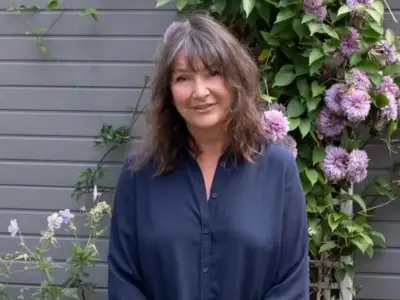
A gardener from Wyke Regis is urging people to stay alert to changes on their skin after surviving a dangerous form of cancer. During Skin Cancer Awareness Month, Alice Connor is sharing her personal journey with melanoma to ensure others recognise the early warning signs.
Alice first noticed an unusual mark on her leg several years ago, which doctors initially cleared. However, the situation changed suddenly during a normal working day in 2023 when the area began to bleed. The 38-year-old sought medical advice immediately and was sent for urgent testing. Following a biopsy, she learned that the mole was a malignant growth.
Personal Story
Alice said: “I was concerned about a mole on my lower leg below my sock line several years ago and had it checked. But it was found to be benign. Then it started to bleed one day when I was at work. I went to my GP and was referred to Dorset County Hospital, where I had a biopsy. I feared it was something bad, but even so, it’s shocking to learn you have a potentially deadly skin cancer.”

The number of people diagnosed with melanoma has risen by nearly 33% in the last 10 years. Current statistics show that roughly 19,400 new cases are identified across the UK annually, averaging out to 53 people every single day.
This type of cancer targets the cells responsible for skin pigment and is frequently linked to ultraviolet radiation. To treat the condition, Alice required an operation to remove the growth and a skin graft taken from her abdomen. Medical teams also conducted a specific biopsy on her lymph nodes to ensure the disease had not migrated elsewhere. While the procedure was a success, the recovery period proved to be a significant physical and emotional challenge.
“Thankfully, I had raised the alarm in good enough time, and the surgery went well. However, the wound wouldn’t heal, and I had to go back and forth from Poole Hospital to have it dressed twice a week, and I couldn’t work for three months,” said Alice.
The inability to work created a new crisis for the family as they struggled to maintain their monthly outgoings. Alice feared that the loss of her income might result in the loss of both her livelihood and her home.
“My biggest worry turned from cancer to how we would pay our mortgage and bills. My husband works, but we rely on both our salaries, and at one point, I was frightened we might lose my business and even our home.”
Help arrived via the Dorset Cancer Care Foundation (DCCF), a local group providing financial grants to those hit hard by illness. The charity stepped in to cover Alice's portion of the housing costs for a full three months.
“I honestly didn’t think I would be entitled to any help. But I was absolutely amazed when the charity came straight back and said they would pay my half of the mortgage for three months. I had been so worried and was in such a panic; it was an unbelievable weight off my mind,” said Alice.
Now three years on, the gardener has been given the all-clear and has safely returned to her outdoor career. She now takes extreme precautions in the sun, wearing protective clothing and wide-brimmed hats whenever she is working.
She said: “If you see me outside now, I am covered from head to foot with long sleeves and a hat. I’m not taking any chances.”
Sun Protection Recommendations
Experts at Cancer Research UK predict that melanoma cases could rise by more than 50% by 2040. Alice believes that being proactive about health and seeking professional advice is the best way to manage the risk.
“I’m incredibly thankful that I followed advice to get my concerns checked out – and also to the NHS, which helped me beat cancer, and the DCCF, which supported me when I was struggling financially afterwards. I would urge anybody concerned about abnormal marks or moles on their body to get them looked at immediately. Skin cancer is becoming more common but if spotted fast it doesn’t have to be fatal.”

The NHS says: "A new mole or a change in an existing mole may be signs of melanoma. Melanomas can appear anywhere on your body, but they're more common in areas that are often exposed to the sun. Some rarer types can affect the eyes, soles of the feet, palms of the hands or genitals. Check your skin for any unusual changes. Use a mirror or ask a partner or friend to check any areas you cannot see. You should see a GP if: You have a mole that's changed size, shape or colour; You have a mole that's painful or itchy; You have a mole that's inflamed, bleeding or crusty; You have a new or unusual mark on your skin that has not gone away after a few weeks; You have a dark area under a nail that has not been caused by an injury."