The Labour government, led by Prime Minister Andy Burnham and Chancellor John Healey, has confirmed it will maintain the Triple Lock on state pensions throughout this Parliament, a decision that could see basic-rate pensioners receive up to £3,074 less per year than those on the full rate. The commitment comes despite mounting pressure from the Organisation for Economic Cooperation and Development (OECD), which has urged the government to scrap the costly mechanism to address the UK's strained public finances.
Triple Lock Mechanism and Its Impact on Pensioners
The Triple Lock ensures the state pension increases by the highest of inflation, average earnings growth, or 2.5 per cent. Under current modelling, if the state pension rises by 4.8 per cent in 2027—the same rate as in 2026—the full state pension would increase to £252.88 per week, or £13,149.88 annually. In contrast, the basic state pension would only reach £10,075 per year, creating a significant £3,074 gap between the two rates.
The basic state pension applies to individuals born before 1951 (men) or 1953 (women), meaning by spring next year, claimants will be at least 74 years old. This demographic is particularly vulnerable to the widening disparity, as they rely heavily on the state pension for their income.

OECD Calls for Reform
In a special chapter on pensions policy, the OECD's experts argue that the Triple Lock "puts upward pressure on public expenditure and adds significant fiscal risks by exposing public finances to supply shocks, thus requiring a timely reform." The organisation's recommendation comes as the UK grapples with tight public finances and the need for sustainable fiscal policies.
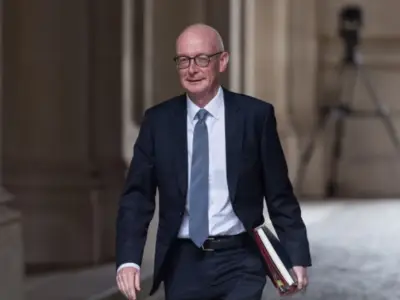
Despite these concerns, the government has reiterated its commitment to the Triple Lock. Pensions Minister Torsten Bell stated, "The government's manifesto commitment is to the triple lock throughout this parliament. That is going to happen." However, he left room for potential changes after the next general election, suggesting that the policy could be reconsidered in the future.
Understanding State Pension Entitlements
To receive the full state pension, individuals typically need 35 years of qualifying National Insurance contributions. However, some people may have gaps in their NI record due to factors such as living abroad or taking time off to care for children. The government allows voluntary payments to boost contribution history, but since April 2025, individuals can only make payments for the previous six years, limiting the ability to fill historical gaps.
The widening gap between the basic and full state pension rates has raised concerns among pensioner advocacy groups, who argue that older pensioners on the basic rate are being left behind. As the Triple Lock continues to be applied, the disparity is expected to grow, potentially reaching £3,000 or more in the coming years.
Political and Economic Implications
The decision to stick with the Triple Lock comes as Labour faces pressure to address fiscal challenges while maintaining key manifesto promises. The OECD's recommendation to ditch the policy highlights the tension between electoral commitments and economic sustainability. While the government has so far resisted such calls, the debate is likely to intensify as public finances remain under scrutiny.
For now, pensioners on the basic state pension will see their payments increase in line with the Triple Lock, but the relative shortfall compared to the full rate will persist. As the policy continues, the financial impact on older pensioners will be a key issue for policymakers and voters alike.