Skywatchers in Birmingham and across the UK are set to witness the most significant partial solar eclipse in nearly three decades on Wednesday, August 12, 2026. The Moon will obscure up to 90% of the Sun in Birmingham, with the celestial event unfolding between 6:15pm and 8:04pm local time.
This eclipse marks the first partial solar eclipse visible from the UK since 1999, when a total eclipse crossed parts of Cornwall and Devon. Unlike that event, this year's eclipse will be partial across the entire country, but the high percentage of coverage makes it a rare and dramatic spectacle.
Exact Timings for Birmingham and Other UK Cities
According to the Royal Museum Greenwich, the eclipse will begin in Birmingham at 6:15pm when the Moon first makes contact with the Sun's disc. Maximum coverage, when approximately 90% of the Sun is hidden, will occur at 7:11pm. The eclipse will conclude at 8:04pm as the Moon moves completely off the Sun.
Timings vary slightly across the UK. In Edinburgh and Glasgow, first contact is at 6:08pm with maximum at 7:05pm. London, Bristol, and Cardiff see first contact at 6:17pm and maximum at 7:12pm, while Truro in Cornwall experiences the latest times, with first contact at 6:18pm and maximum at 7:16pm. The eclipse ends in Truro at 8:10pm, the latest across the UK.
What to Expect During the Eclipse
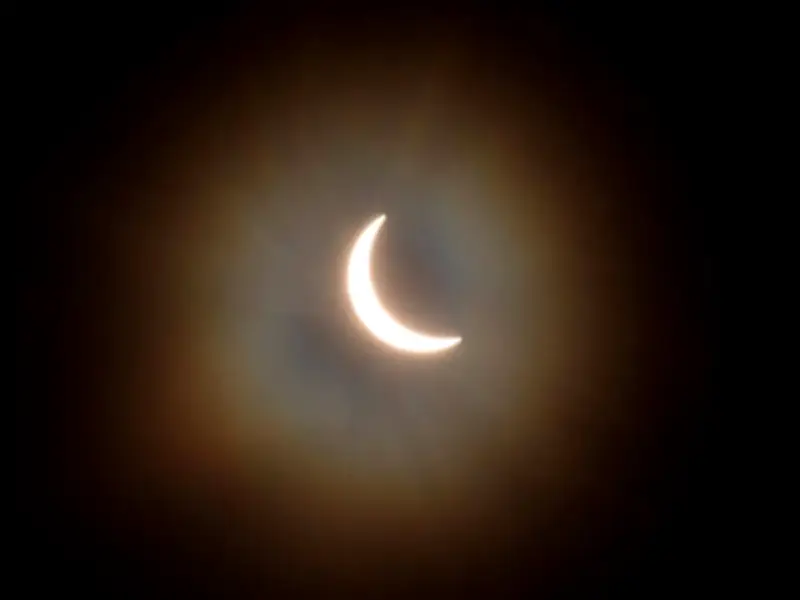
As the afternoon progresses, the Moon will gradually slide across the Sun, creating a crescent shape. At maximum coverage, light levels will drop noticeably, and temperatures may cool, though the sky will not go completely dark as it does during a total eclipse. Conditions may resemble a cloudy day or the dim light of dawn or dusk.
Because the event occurs near sunset, the Sun and Moon will be low in the western sky. An elevated location with an unobstructed view of the western horizon will provide the best vantage point. Birmingham residents should look west from high points or open areas to catch the full spectacle.
Safety Warning: Never Look Directly at the Sun
Experts are urging the public to use only certified solar eclipse glasses that meet the ISO 12312-2 safety standard. Regular sunglasses, no matter how dark, are not safe, as they reduce glare but still allow harmful solar radiation to reach the retina.
Dr Mohamed Elalfy, consultant ophthalmologist and president of the Royal College of Ophthalmologists, warned: "The safest way to enjoy the eclipse is to observe it indirectly, such as by watching a live broadcast. Looking directly at the Sun during a solar eclipse can cause damage to the retina, potentially damaging the cells responsible for sharp central vision."
He added: "Crucially, the retina has no pain receptors, so people will not feel the damage as it happens. Symptoms may only become apparent several hours later and can include blurred vision, a central blind or dark spot, distorted vision, reduced colour perception and increased sensitivity to light. While some people recover over weeks or months, others can be left with permanent visual impairment."
After the 1999 eclipse, the Royal College of Ophthalmologists recorded around 70 cases of vision problems, with about 40% of those affected having viewed the eclipse for less than a minute.
Alternative Viewing Methods
For those without certified glasses, indirect viewing methods are recommended. Pinhole projectors, which cast an image of the Sun onto a surface, are a safe and simple option. Live broadcasts from observatories and space agencies will also provide real-time views of the eclipse.
The eclipse will also be visible across much of Europe, including France, Belgium, Switzerland, and northern Italy, where coverage ranges from 88% to 95%. Parts of Greenland, Iceland, and northern Spain will experience a total solar eclipse, with the Sun completely hidden by the Moon.
Why This Eclipse Matters
This is the first partial solar eclipse visible from the UK since 1999, making it a landmark event for astronomers and casual observers alike. The high percentage of coverage in Birmingham and other UK cities ensures a dramatic visual display, provided the weather cooperates.
For the best experience, plan to be outside by 6:00pm with your viewing equipment ready. Find a spot with a clear view of the western horizon, and remember: safety first. Enjoy the spectacle, but never risk your eyesight.