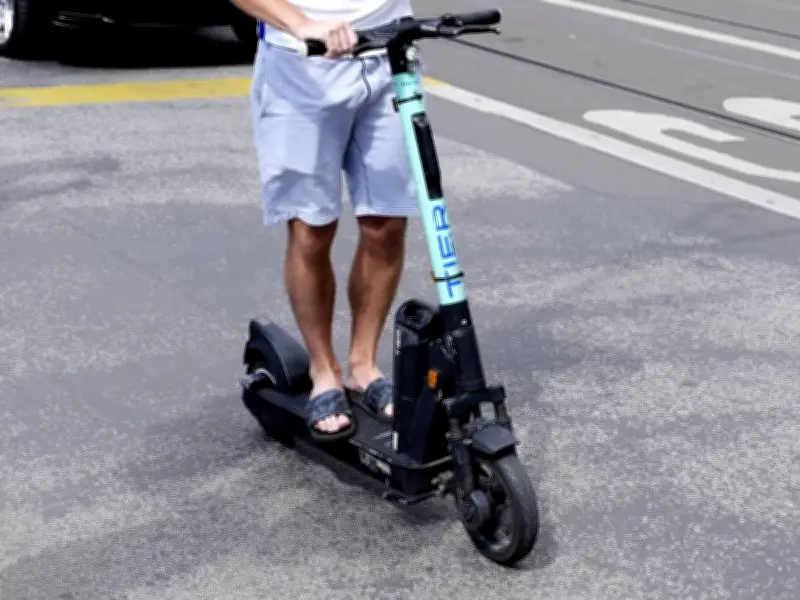
E-scooter riders are significantly more likely to suffer traumatic brain injuries and internal organ damage compared to motorcyclists or cyclists, according to a major UK study. The research, which analyzed data from 15,247 patients, found that e-scooter users face a 3.5 times higher risk of traumatic brain injury than motorcyclists and a 1.5 times increased risk of internal organ damage. Helmet use among e-scooter riders was found to be rare, with only 5.9% wearing helmets, compared to approximately 75% of motorcyclists and 45% of cyclists.
Study Reveals Alarming Injury Patterns
The study, led by surgeon David Bodansky, examined data from the National Major Trauma Registry, covering 580 e-scooter riders, over 7,000 motorcyclists, and 7,740 cyclists who sustained moderate to severe injuries in incidents across 18 cities in England and Wales between 2020 and 2022. The findings, published in the journal Scientific Reports, highlight that e-scooter riders also face a 3.2 times higher risk of arterial or venous injuries compared to motorcyclists, and 1.7 times higher risk compared to cyclists.
Interestingly, the risk of fractures for e-scooter riders was 20% lower than for motorcyclists and 10% lower than for cyclists. The researchers noted that over one in 10 e-scooter users were children, who also faced a greater likelihood of injury. Women were found to be more prone to sustaining serious injuries, with a 2.1 times higher likelihood of severe injury compared to men.
Self-Reported Collision Data Unveils Gender Disparities
In addition to the trauma registry data, the research team analyzed over 23,000 self-reported e-scooter collisions and near misses. This revealed that men experienced a 36% lower crash risk than women. The combined data allowed researchers to identify previously under-explored trends and socioeconomic factors, such as incidents occurring more frequently in deprived areas.
The researchers stated that the findings "emphasise the need for policies that address the sociodemographic determinants of e-scooter safety to prevent avoidable harm." They added, "Electric scooters have evolved rapidly from novelty devices to a common form of urban mobility. As e-scooter adoption expands across Europe, embedding rigorous public health evidence into forthcoming UK legislation will be critical to ensure that the benefits of micromobility are realised while minimising avoidable harm."
Government Trials and Legal Status
E-scooters can be hired through Government trial schemes in cities including Liverpool, Bristol, Birmingham, and several London boroughs. However, using privately owned e-scooters in public remains illegal. Despite this prohibition, researchers noted that electric scooters "are increasingly used" throughout the UK, yet limited evidence exists regarding "injury patterns, severity and exposure-adjusted risk."
Rising Collision Statistics
The most recent Department for Transport statistics indicate there were 1,312 collisions involving e-scooters in 2024, up from 1,292 in 2023. These collisions resulted in 1,390 casualties and six deaths. A Department for Transport spokesperson said: "These are concerning findings, and our thoughts are with anyone who has been injured on our roads. Road safety is our top priority, which is why our e-scooter trials are testing their use in a controlled environment now, before updating the law to ensure they can be used safely more widely."
The study's findings are particularly relevant for Birmingham, where e-scooters are part of the Government's trial scheme. As the city continues to embrace micromobility, the research underscores the need for enhanced safety measures, including helmet promotion and infrastructure improvements, to protect riders and pedestrians alike.