VAT cut on home charging widens EV ownership gap
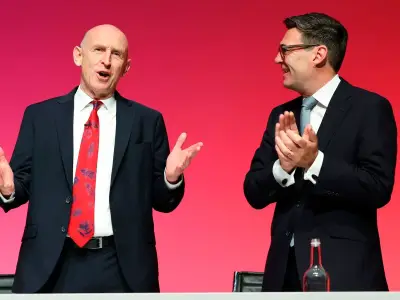
Prime Minister Andy Burnham announced that VAT on electricity bills will be scrapped from October, a move aimed at encouraging electric vehicle adoption. However, the policy disproportionately benefits those with driveways who can charge at home, while millions of drivers without off-street parking will continue to pay up to 32.4 pence per mile on public networks.
Public charging costs: up to 32.4p per mile
According to Carwow, the Ionity network charges £0.81 per kWh. For a 100kWh EV, that means £81 to charge from empty to full; a 50kWh EV costs £40.50. At an average of 5 miles per kWh, a driver pays 16.2 pence per mile. But for less efficient EVs, such as those managing 2.5 miles per kWh, the cost jumps to 32.4 pence per mile.
Other networks are even pricier. Instavolt charges £0.92 per kWh, making a full 100kWh recharge cost £92. Osprey rapid chargers run at £0.86 per kWh, totalling £86. BP Pulse tariffs vary between £0.69 and £0.89 per kWh depending on charger speed and subscription status.
Critics decry 'one of the biggest inequalities' in EV transition
Tanya Sinclair, chief executive of Electric Vehicles UK, said the Prime Minister's announcement “entrenches one of the biggest inequalities in the UK’s EV transition.” She told the Press Association: “Millions of drivers without off-street parking have no choice but to pay 20% VAT when charging in public, while those with a driveway will now pay none at all. If this Labour Government is serious about a fair transition, it cannot ask EV drivers to pay different prices for the same electricity simply because of where they live.”
Siobhan Doyle, consumer writer at Carwow, added that eliminating VAT on domestic electricity “highlights the growing divide in EV ownership.” She said: “If the Government wants to make electric vehicles truly accessible and fair for everyone, equalising public and home charging VAT remains the crucial missing piece of the puzzle.”
No benefit for millions of renters and flat dwellers
An estimated 40% of UK households lack off-street parking, according to previous government data. Renters, flat dwellers, and residents of terraced houses are most affected. They rely on public chargers, which already attract 20% VAT compared to the 5% VAT on domestic electricity before the cut. The new policy widens that gap to 20% versus 0%.
Impact on fuel poverty and transition targets
Environmental campaigners warn that the inequality could slow EV take-up among lower-income groups, who are more likely to live in homes without driveways. The UK has a target to end sales of new petrol and diesel cars by 2030. Without affordable public charging, many drivers may be priced out of the transition.
Andy Burnham previously ruled out two rumoured tax changes for households in England, but the VAT cut has drawn sharp criticism from industry bodies. The Motorists' Association called for an urgent review of public charging VAT to ensure a level playing field.
What next for public charging pricing?
Consumer groups are urging the government to extend the VAT exemption to public chargers. Carwow's analysis shows that even with competitive rates, public charging often costs more per mile than petrol for inefficient EVs. The Ionity network's 32.4p per mile compares to about 15p per mile for a petrol car achieving 40 mpg.
The new Prime Minister’s office has not yet responded to requests for comment on whether future measures will address the disparity. Meanwhile, EV drivers without driveways face a stark choice: pay a premium on public networks or struggle to find affordable charging options.