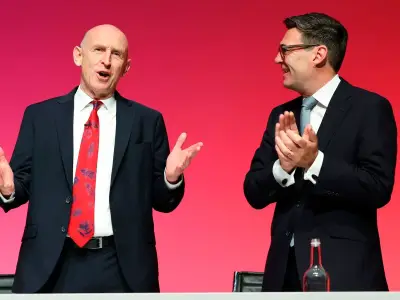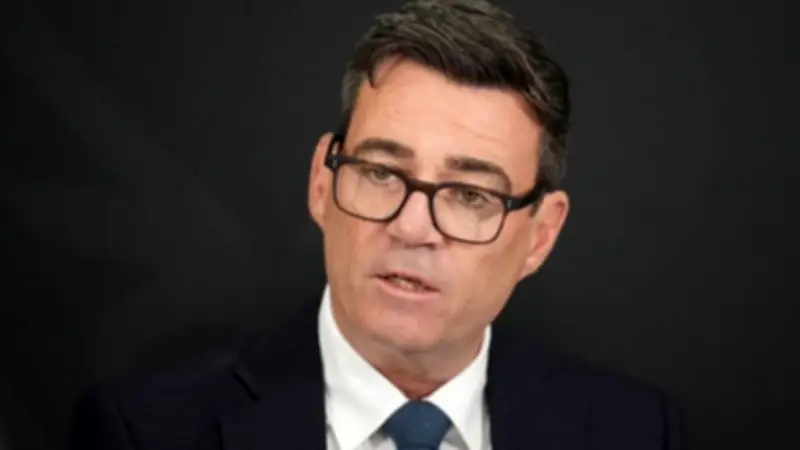
Prime Minister Andy Burnham has warned that the NHS faces a bleak future unless decisive action is taken to fix England's struggling social care system. In his first major interview since entering Downing Street, Burnham refused to commit to a specific timeline for reforms, stating that hospital waiting lists cannot be reduced until local care packages are fully operational.
Timeline uncertainty
Speaking to the BBC, Burnham said: "I can't put a timeline on it right here, right now. If we don't do it, the NHS will collapse under the weight of trying to care for people who've not really needed to end up in the NHS system." The Prime Minister's comments come as the NHS grapples with record waiting lists and mounting pressures from an ageing population.
Unlike NHS care, community support is not free at the point of delivery, meaning families are sometimes forced to sell their homes to pay for essential help. Currently, anyone with personal capital worth more than £23,250 is barred from receiving council funding towards care costs.
Personal mission
Resolving the social care sector remains an ongoing personal mission for Burnham, who previously spearheaded transformation blueprints while serving as health secretary under Gordon Brown. His 2010 strategy to establish a unified national care support network was ultimately blocked by the Conservatives, who branded the funding model a 'death tax'.
Tory leader Kemi Badenoch has written to Burnham, challenging him to rule out tax rises or increased borrowing to pay for social care reform. The Prime Minister is expected to make interventions on social care, youth unemployment, and devolution in the coming days.
Welfare spending
Burnham, who returned to the front benches in June after a nine-year absence, insisted that the Government needed to tackle the benefits bill – pointing to expenditure on housing benefits as a particular concern. He suggested that ministers could tighten the conditions tied to receiving support, while also insisting that greater assistance should be made available to help people into employment.
He said mental health support should be delivered 'in work', but cautioned that he would not pursue 'crude cuts' to reduce welfare spending. Welfare expenditure proved a thorny issue for his predecessor Sir Keir Starmer, who faced a backbench rebellion in 2025 on the matter before ministers retreated in the House of Commons.
Housing and benefits
Burnham said: "I think we've got to get really serious as a country at getting the welfare bill down, and one of the things I would point to was the sell-off of social and council homes in the 1980s onwards that has left us chasing rents in the private rented sector through the benefit system, which means we've got a very high housing benefit bill in this country. The building of new council and social homes over time will help get that benefit bill down in a fair and sustainable way."
He added: "I think the thing I'm just pushing back on is this idea that we go to a kind of crude approach, crude cuts to benefits to get the welfare bill down. Often, that just pushes people into even more crisis and then even more public spending in another part of the system. We need a system that sets people up for success rather than pays for failure."
No early election
Burnham subsequently ruled out calling a snap general election before 2029, amid growing speculation that he would seek his own mandate with a fresh manifesto. He told the BBC: "I'm going to rule it out. Yeah, there's no early general election, I don't think people want it. You know, we've – well, the opinion polls might say some people do, some people don't."