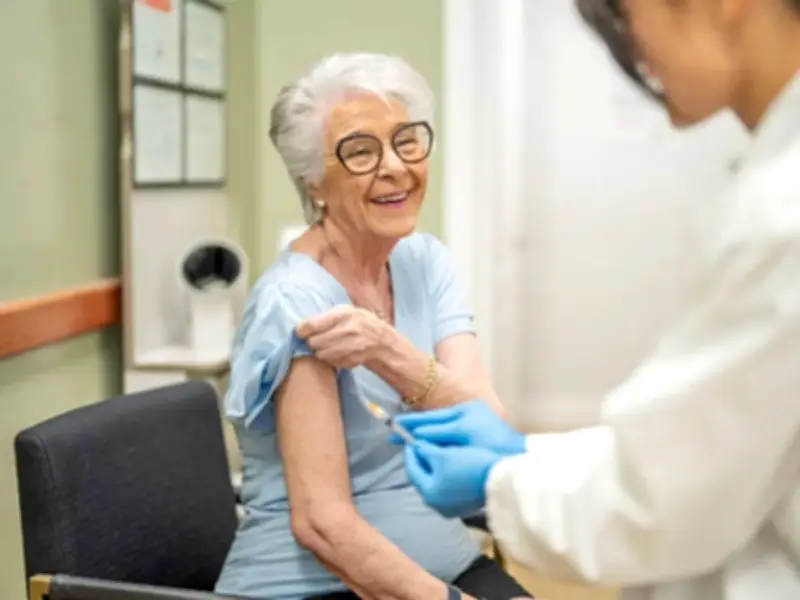
The NHS has confirmed that the flu vaccine rollout for the 2026 to 2027 season will begin on October 1, with no changes to the eligible cohorts compared to the previous year. This means that from October, those aged 65 years and over will be called forward to receive their flu jab.
Who is eligible for the flu vaccine?
In addition to the over-65s, the NHS has outlined that the following groups will also be offered the flu vaccine: those aged 18 years to under 65 years in clinical risk groups, those in long-stay residential care homes, and carers in receipt of carer’s allowance, or those who are the main carer of an elderly or disabled person.
Other eligible groups include close contacts of immunocompromised individuals, and frontline workers in a social care setting without an employer-led occupational health scheme. This includes those working for a registered residential care or nursing home, registered domiciliary care providers, voluntary managed hospice providers, and those employed by individuals who receive direct payments (personal budgets) or Personal Health budgets, such as personal assistants.
Guidance for healthcare and social care workers
The NHS states: "All frontline health care workers, including both clinical and non-clinical staff who have contact with patients, should be offered flu vaccine from 1 October as a vital part of the organisation’s policy for the prevention of the transmission of flu. Employers should make the vaccine accessible for all frontline staff, encourage staff to get vaccinated, and monitor the delivery of their programmes."
Social care workers directly working with people clinically vulnerable to flu should also have the flu vaccine provided by their employer. However, there are circumstances where frontline staff, employed by specific social care providers without access to employer-led occupational health schemes, can access the vaccine through the NHS free of charge.
Delivery expectations and priorities
The NHS has set expectations for providers, stating: "Providers are expected to deliver a 100% offer to eligible groups. They should ensure they make firm plans to enable delivery of more vaccinations in the 2026 to 2027 season than they did in the 2025 to 2026 season."
Providers are also asked to ensure they have robust plans in place to identify and address health inequalities for all underserved groups, with progress expected on reducing unwarranted variation and improving uptake.
Primary care providers are asked to prioritise the vaccination of 2 and 3 year olds as soon as the vaccine is available, as this will help reduce transmission and protect those most vulnerable. Further communications from NHS England will describe operational considerations for the rollout.