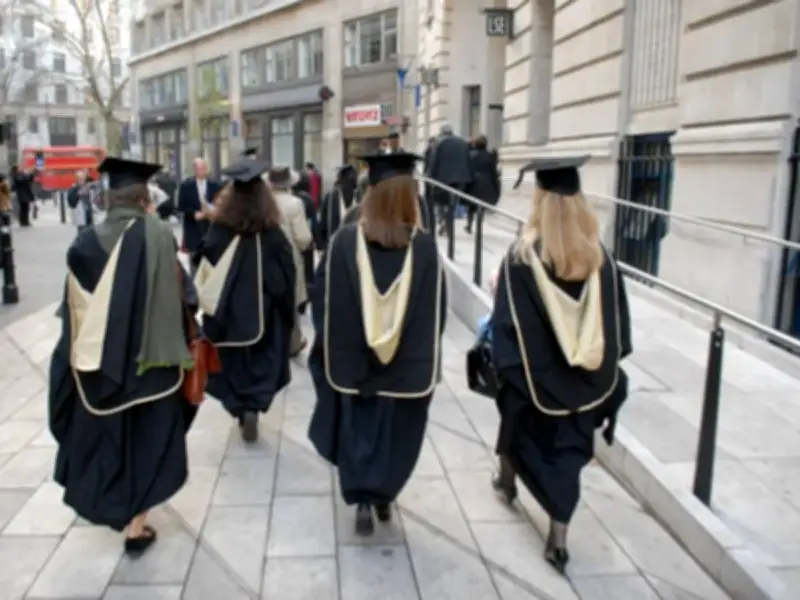
Graduates in England could end up £185,000 worse off in retirement because student loan repayments are taken from salaries before pension contributions are made, according to new research.
A typical graduate in England now faces lifetime student loan repayments of £56,240, more than double the £25,700 expected from those who started university before the 2012 reforms, the Intergenerational Foundation (IF) found.
The research suggests that if graduates instead put the money saved from lower repayments into their pensions, they could build up an extra £185,000 by retirement. Alternatively, putting those savings towards a house deposit could boost it by £16,000 over 15 years.
Plan 5 loans: A ticking time bomb
Toby Whelton, the report's author, described Plan 5 loans as "a ticking time bomb, set to detonate as today's students enter the workforce and confront repayment terms harsher than those faced by previous cohorts."
Plan 5 loans apply to first-time undergraduate English residents who started university in or after 2023, as well as future students. The repayment figures change slightly each year, and this guide is based on the current academic year.
Repayments begin in the April after leaving or finishing a course. For example, if a student finishes in summer 2028, repayments would likely start in April 2029, nine months after leaving. If a student withdraws earlier, repayments start in the first relevant April afterwards.
How repayments work
Graduates repay 9% of everything earned above the current £25,000 threshold. Those earning less than that do not pay, and higher earners repay more each month. The repayment threshold is supposed to rise with RPI inflation from 2027.
Mr Whelton said: "Much has been made of high interest rates and rising outstanding balances, but these are symptoms of a more insidious and significant transformation: the withdrawal of government investment from what was always intended to be a shared-cost system."
He added: "By stealth and with minimal democratic scrutiny, successive governments have piled costs onto young graduates in the hope that nobody would notice."
Restoring fairness
Mr Whelton argued that "fairness can be restored only by reasserting the state's responsibility to invest in young people's education and future. Anything less will fail to deliver meaningful change for graduates."
The research from the Intergenerational Foundation highlights the long-term financial impact of student loan repayments on graduates' retirement savings and home-buying prospects.