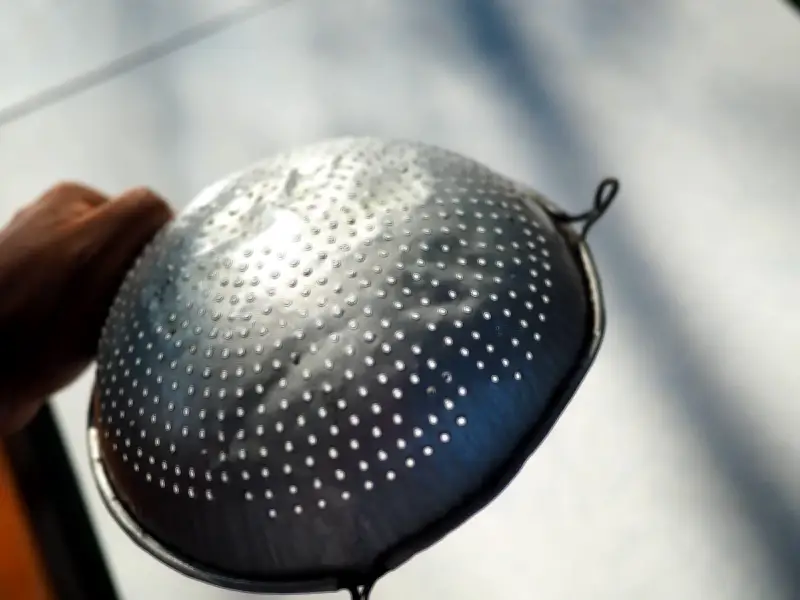
Residents across the UK will have the chance to witness a partial solar eclipse tonight, and a simple kitchen colander can be used to observe it safely. With specialist eclipse glasses in short supply after a rush on retailers, this household item offers an accessible alternative.
The eclipse is the most significant celestial event of its kind in the UK since 1999. However, the Royal Astronomical Society has cautioned against looking directly at the sun without appropriate protective eyewear, noting that ordinary sunglasses and dark goggles are equally unsafe due to insufficient UV protection.
Safety warnings from health authorities
The UK Health Security Agency (UKHSA) has issued guidance on safe observation, warning that permanent eye damage can occur within seconds. The agency stated: "During an eclipse, the sun appears dimmer than usual. This makes it easier to look at directly - and that's precisely the problem."
"The reduced brightness can override the body's natural reflex to look away, allowing intense sunlight to reach and damage the retina. This damage happens without causing any pain, so you may not realise harm is occurring until it's too late," the UKHSA added.
How the colander method works
Eye specialist David Jones, consultant ophthalmologist at the Royal Cornwall Hospital Trust, has shared his preferred method online. By holding a colander towards the sun while looking away from it, hundreds of eclipse images are projected simultaneously onto a surface, creating a kaleidoscope effect.
Jones demonstrated the technique using a blank sheet of paper behind the colander. He said: "If you hold the colander to the sun and you look away from the sun, protecting your eyes, you can make not just one picture of the sun but a hundred all at once."
Timing and visibility across the UK
The partial eclipse will be visible between 6pm and 8pm, depending on location. Those in the South West are expected to see the greatest proportion of the sun obscured by the moon, with approximately 95 per cent coverage. Londoners are anticipated to experience around 90 per cent coverage.
For those using specialist eclipse glasses, it is essential to check for the safety certification 'ISO 12312-2' or 'ISO 12312-2:2015' printed on the frames. Without this certification, the glasses cannot be considered safe for use.