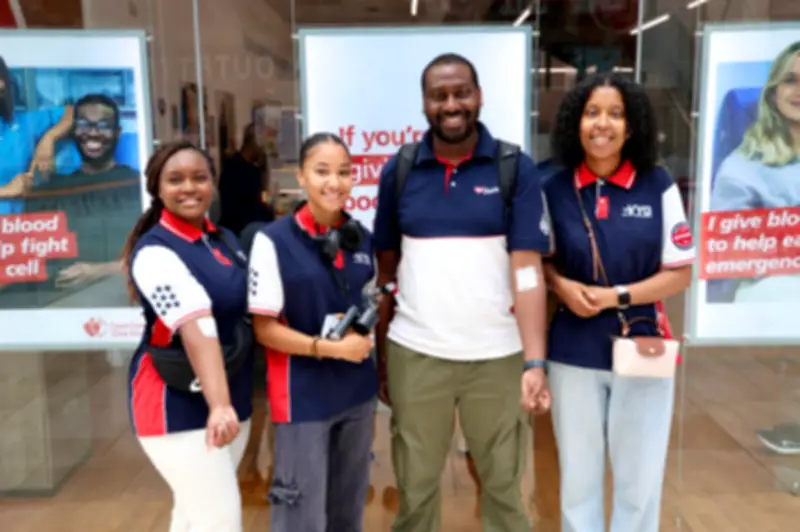
A recent survey has uncovered a startling reason why many people in Birmingham do not donate blood: they have never been asked. The study, conducted by NHS Blood and Transplant, reveals that a significant portion of the population is willing to give blood but has not been prompted to do so.
Survey Findings
The survey, which involved over 2,000 adults across the West Midlands, found that 40% of non-donors said they would consider donating if they were directly asked. Among those who have never donated, 25% cited not being asked as the primary barrier. This suggests that a simple invitation could significantly boost donor numbers.
Why People Don't Donate
Other common reasons for not donating include fear of needles (cited by 30% of respondents), lack of time (20%), and medical ineligibility (15%). However, the survey highlights that many people are unaware of the donation process or where to go. Only 10% said they were not interested in donating at all.
NHS Blood and Transplant is now launching a campaign to encourage more people to ask about blood donation. The campaign will target workplaces, community centers, and online platforms to reach potential donors.
Impact on Birmingham
Birmingham has a constant need for blood donations, with hospitals requiring around 500 units per day. The survey's findings are crucial for addressing the shortfall. Currently, only 3% of the eligible population in the city donates blood regularly.
Local health officials are urging residents to step forward. Dr. Sarah Johnson, a consultant at Queen Elizabeth Hospital, said, "Blood donation saves lives, and it is shocking that many people simply haven't been asked. We encourage everyone to consider donating and to ask their friends and family to do the same."
How to Donate
Donating blood is a simple process that takes about an hour. Potential donors can register online or visit a local donation center. The NHS assures that all safety measures are in place, and donors are screened for eligibility.
The survey also found that younger people, aged 18-24, are more likely to donate if asked through social media campaigns. Therefore, the NHS is increasing its presence on platforms like Instagram and Facebook to reach this demographic.
Conclusion
The survey underscores the power of a simple question. By reaching out and asking people to donate, the NHS hopes to increase the donor pool and ensure that blood supplies remain stable. For those interested, more information is available on the NHS Blood and Transplant website.