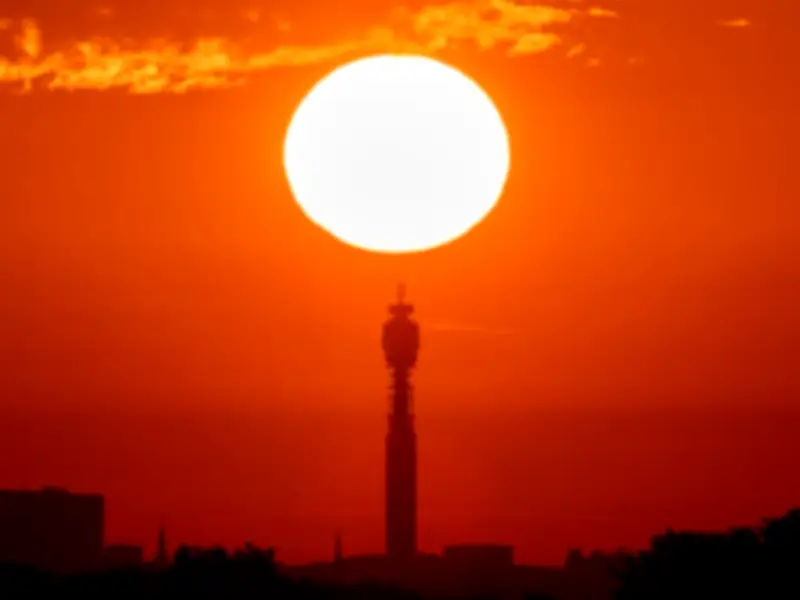
The Met Office has warned that the UK heatwave is intensifying into a severe weather event, with temperatures forecast to reach 38C by Wednesday, June 24, potentially smashing the 1976 June record of 36C in Southampton.
Forecast Temperatures and Timeline
Temperatures are predicted to hit 34C on Monday, June 22, followed by 37C and 35C highs on Tuesday, June 23, in England and Wales. The heatwave will peak on Wednesday, June 24, into Thursday, June 25, with highs of 38C, before dropping to 33C on Friday.
Comparison to the 1976 Heatwave
The 1976 heatwave was an unusually hot summer that led to 20% excess deaths and a significant increase in hospital emergency admissions from June 24 to July 8, 1976, compared to the same period in 1975 or 1974, according to the Monthly Journal of the Association of Physicians (now An International Journal of Medicine). The Met Office expects this week's heatwave to surpass the 1976 June record.
Impacts on Health and Infrastructure
Met Office Deputy Chief Forecaster Tom Crabtree said: “The forecast heatwave is developing into an impactful severe weather event, with record breaking June temperatures and very high humidity. The combination of heat and humidity will be oppressive and bring impacts across society from public health and infrastructure, to power and water supplies.”
The UK Health Security Agency (UKHSA) warns of “significant impacts” across health and social care services, including a rise in deaths, particularly among those aged 65 and over or with health conditions, and potential impacts on younger age groups. There is likely increased demand on health and social care services, with internal temperatures in hospitals and care homes potentially exceeding recommended thresholds for clinical risk assessment.
Additional Risks and Warnings
The heat may affect the ability of the workforce to deliver services, and indoor environments overheating could increase risks to vulnerable people living independently in community and care settings. Issues managing medicines are also expected. The UKHSA warns of staffing issues due to external factors such as transport disruptions, increased demand for power exceeding capacity, and other sectors beginning to observe impacts like travel delays. Water-related incidents may increase, including risks from cold-water shock and drowning.