The Met Office has confirmed that another heatwave is 'likely' to arrive in the UK next week, but it will be significantly milder than the record-breaking June heatwave that closed schools and disrupted travel.
Heatwave expected but less intense
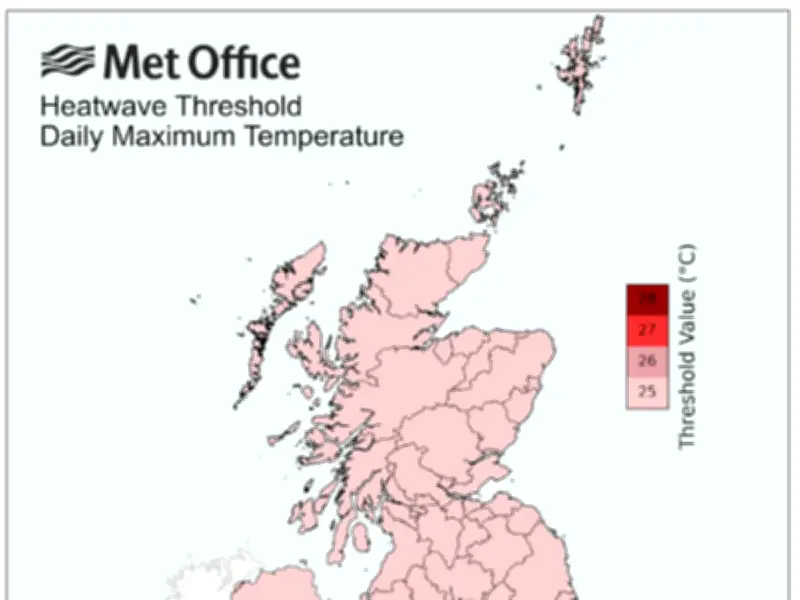
Meteorologist Honor Criswick stated: "Heatwave criteria is likely to be met by midweek in parts of the south. However, at present we are not expecting a repeat of the exceptional heat and humidity experienced in June and this is more typical summer hot weather." Inland temperatures could reach the low 30s in parts of England, with Birmingham and the West Midlands expecting 29°C.
Unlike June, overnight temperatures will be warm but not oppressive. Criswick added: "Overnight minimals will also generally be above average, and on the warm side in urban areas by early next week. However, once again, it should not be nearly as oppressive as some nights were in June."
June heatwave in context
The UK's record for the hottest June temperature was broken on 24 June, with 35.7°C recorded in Surrey, surpassing the previous record of 35.6°C set in Hampshire in 1976. The extreme heat forced school closures and train cancellations across the country.
Marine heatwave warning
The Met Office also warned of a 'long-lasting UK marine heatwave' likely to reach extreme levels next week. Sea temperatures are already 2°C above average, with local anomalies of 5°C off the Welsh and English coasts. If settled weather continues, the marine heatwave could intensify to Category 4, classified as 'extreme' – a rare occurrence in UK waters.
Despite warmer seas, the Met Office cautioned against complacency. Holly Clements, Head of Warnings and Guidance, said: "It is vital for the public to understand that although sea-surface temperatures are currently well above average in many coastal locations, this does not avoid the risk of cold-water shock. With warmer weather approaching, and even with marine heatwave conditions, it's important to remember that the water around the UK is still cold. Entering it unexpectedly can lead to cold-water shock."