Spring Statement 2026: Budget Watchdog Revises Growth Forecast Downward
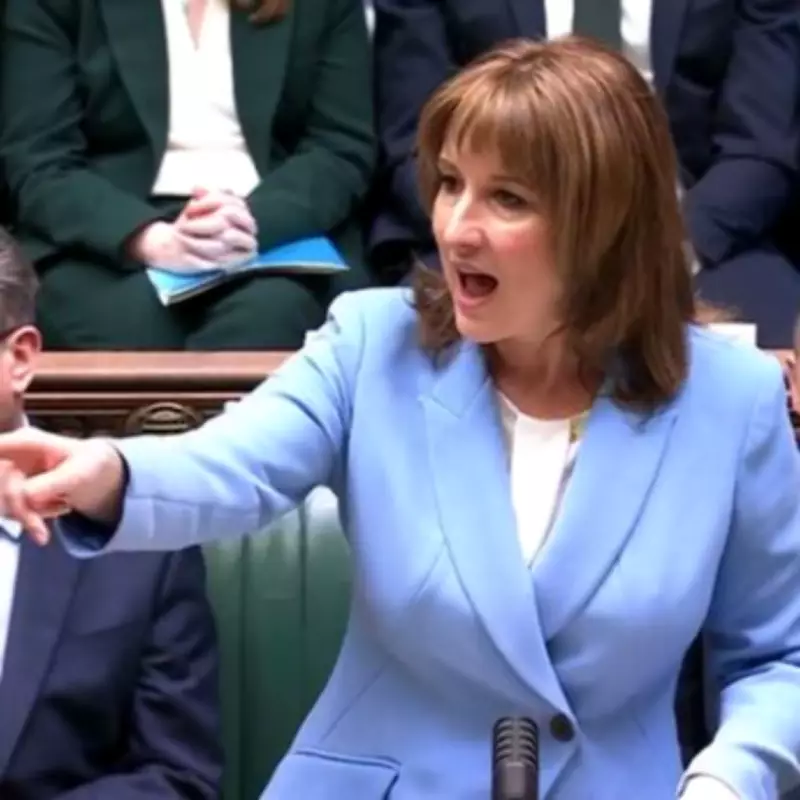
Chancellor of the Exchequer Rachel Reeves has delivered her Spring Statement to the House of Commons, insisting the Government possesses the "right economic plan" for the United Kingdom. This declaration comes despite the independent Office for Budget Responsibility (OBR) downgrading its growth forecast for 2026.
Revised Economic Projections
The OBR now indicates that gross domestic product (GDP) will increase by 1.1% in 2026, a reduction from the 1.4% it forecast in November of the previous year. However, the fiscal watchdog provided a more optimistic outlook for the subsequent years, upgrading its forecasts for 2027 and 2028 from 1.5% to 1.6%.
Rachel Reeves addressed MPs against the backdrop of ongoing conflict in the Middle East, stating: "This Government has the right economic plan for our country, a plan that is even more important in a world that in the last few days has become yet more uncertain."
Chancellor's Defense of Economic Strategy
The Chancellor argued that the new OBR forecasts validate the Government's approach, highlighting that inflation is down, borrowing is down, living standards are up, and the economy is growing. She emphasized the need to navigate global turbulence, noting her regular contact with Bank of England Governor Andrew Bailey, international counterparts, and key industries like maritime and North Sea energy.
"In an increasingly dangerous world, I am proud to be the Chancellor that is delivering the biggest uplift in defence spending since the Cold War," Reeves stated, citing commitments including £650 million for Typhoon fighter jet upgrades and a £1 billion helicopter deal with Leonardo.
Long-Term Growth and Fiscal Responsibility
The OBR has adjusted the GDP growth profile, forecasting 1.1% growth in 2026, 1.6% in both 2027 and 2028, and 1.5% in 2029 and 2030. The Chancellor noted that GDP per capita is set to grow more than previously expected, with growth of 5.6% over the Parliament.
"And by the next election, after accounting for inflation, people are forecast to be over £1,000 a year better off," she told the Commons.
On public finances, borrowing is projected to reduce by nearly £18 billion compared to autumn forecasts. Public Sector Net Borrowing is expected to fall from 4.3% this year to 3.6% next year, eventually reaching 1.8% in 2029-30.
Addressing Unemployment and Youth Support
Unemployment is forecast to peak later in 2026 before declining in each subsequent year, ending the forecast period at 4.1%. The Chancellor acknowledged ongoing challenges, particularly for young people affected by what she described as "years of Tory mismanagement."
The Government is implementing measures including apprenticeship reforms and an £820 million youth guarantee to provide employment support and job opportunities. Reeves pledged further reforms in the coming weeks to support young people.
Political Context and Future Outlook
The Chancellor expressed confidence that the Government can outperform economic forecasts, as it did the previous year. She criticized opposition parties—Conservatives, Reform UK, Liberal Democrats, and the Green Party—for opposing what she termed "progress."
Reeves concluded by emphasizing the restoration of economic stability and the potential for additional fiscal headroom. "If we stay the course and stick to our plan, and our debt interest rates return to the G7 average, we will have £15 billion a year more for the priorities of working people," she asserted, framing this as the achievable prize of the Government's economic strategy.