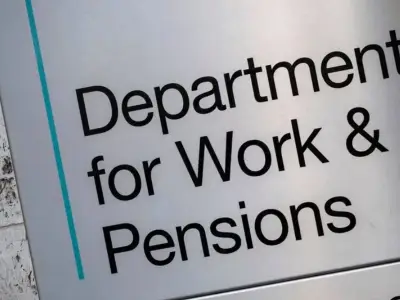
The Women Against State Pension Inequality (WASPI) campaign has delivered a blistering response to the Labour government's decision to block Department for Work and Pensions compensation payments for women born in the 1950s. The group's chairwoman, Angela Madden, has launched a scathing attack, accusing ministers of treating affected women with what she describes as "utter contempt".
Legal Action and Parliamentary Pressure Promised
In a strongly-worded statement, Ms Madden confirmed that WASPI is actively seeking legal advice and exploring all available options to challenge the government's position. She emphasised the campaign's determination to pursue justice through both parliamentary channels and the courts, declaring that "all options remain on the table" for securing what she calls "the justice that has been so shamefully denied."
Ms Madden characterised the decision as a "disgraceful political choice" made by what she termed a "small group of very powerful people" who have decided that "the harm and injustice suffered by millions of ordinary women simply does not matter." Her comments reflect the deep frustration felt by campaigners who have been fighting for recognition and compensation for years.
Cross-Party Criticism and Ombudsman Recommendations
The government's position has attracted criticism from across the political spectrum, with Labour MP Rebecca Long-Bailey, who chairs the All-Party Parliamentary Group on State Pension Inequality for Women, speaking out against the decision. In her own statement issued on Thursday, January 29, Ms Long-Bailey argued that it was "frankly wrong" for the government to reject compensation once again.
She highlighted that the Parliamentary and Health Service Ombudsman had previously identified maladministration and injustice in the handling of state pension age changes, with clear recommendations for compensation. Ms Long-Bailey warned that ignoring these recommendations "not only undermines the authority of the Ombudsman, it sends a damaging message about how the state responds when it gets things wrong."
Government's Financial Justification and Historical Context
The Labour government's decision comes despite a review of their previous policy not to offer redress, which was prompted by the rediscovery of a 2007 DWP evaluation. This historical document had originally led officials to stop sending automatic pension forecast letters to affected women, contributing to the communication failures that campaigners argue left millions unprepared for pension age changes.
Labour's Work and Pensions Secretary, Pat McFadden, defended the government's position in the House of Commons on Thursday, arguing that a targeted compensation programme would be "not be practical." He cited financial concerns, suggesting that a wider flat-rate compensation scheme could cost taxpayers up to £10.3 billion, a figure the government appears unwilling to commit given current economic pressures.
The ongoing controversy highlights the complex intersection of pension policy, historical government decisions, and contemporary political calculations. With WASPI campaigners vowing to continue their fight through legal and parliamentary means, this issue shows no signs of disappearing from the political agenda, representing a significant challenge for a government that must balance financial responsibility with addressing what campaigners see as a profound historical injustice.