Barbara Holland, 76, and Raghib Ahsan, 79, reside in a neat terrace in Handsworth overlooking the park. When visited, both are wearing house slippers and colourfully patterned sweaters. Ahsan ushers the visitor into the living room then briskly heads to the kitchen to make coffee while Holland joins on the squishy sofa. She reaches for a large folder.
This folder is one of many they have brought down from the office upstairs, where they keep reams of meticulously organised paperwork. Much of it is left over from their careers — Ahsan is a solicitor and Holland is a retired teacher and play worker. However, several files hold documents relating to a notorious case of vote-rigging that shook Birmingham in the summer of 2004, known locally as "the banana republic" trial, a reference to the memorable phrase used by the judge.
At that time, Ahsan was secretary of a small party called the People's Justice Party (PJP). The PJP drew considerable support from the Kashmiri community in north and east inner-city Birmingham. He had served as a Labour councillor for Sparkhill in the 1990s before parting ways with the party. In 2003, an employment tribunal ruled that Labour had discriminated against him in not selecting him as a candidate from 1997 to 2000. Holland was, and remains, a member of the Labour Party.

When the PJP took three Labour councillors in Bordesley Green to election court in 2005, Holland's habit of meticulous record-keeping proved crucial in securing their win. Justice Richard Mawrey KC wrote in his judgment that he placed "considerable reliance" on her documentation. Mawrey found "widespread fraud" in the ward's 2004 election and banned three Labour councillors from office for five years, as well as three from the neighbouring ward of Aston, although one was later cleared of personal guilt.
Much of the case turned on voter signatures that did not match. Mawrey found that in Bordesley Green more than 1,600 votes had been tainted because the signature on the application to vote by post did not match the signature on the declaration of identity that each voter completed to submit their ballot.
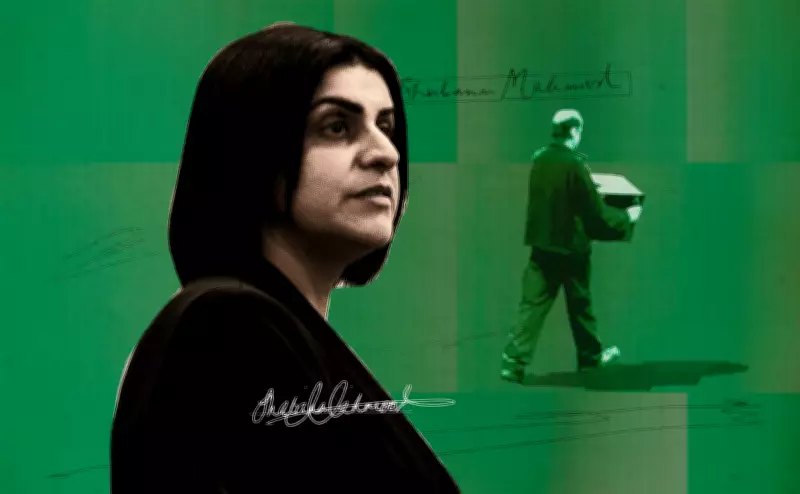
As The Dispatch exclusively reported yesterday, evidence presented at that trial included postal-vote documentation submitted by the now-home secretary Shabana Mahmood. Two of her forms bore strikingly different signatures, but a spokesperson for Mahmood said "she signed both of these documents, which are clearly in her own handwriting."
When The Dispatch first approached Mahmood about this story on Friday, her special adviser explained the discrepancy by saying that Mahmood used to use two different signatures. The Dispatch has repeatedly asked why she would have used a different signature in a situation like this, where the declaration of identity document exists to authenticate that the right voter is returning the ballot, but no response has been received.
In her living room, Holland carefully opens the "schedule", her comprehensive database of evidence used in the trial. At the time, she pored over the clues within to develop her hypothesis about what really happened with the mismatching Mahmood signatures. To this day, she believes she knows the truth.
"We could see that there had been a massive fraud, and the decision of the judge brought that out when it did eventually come," she says, referring to the case as a whole. However, to her mind, there is still more to be uncovered.