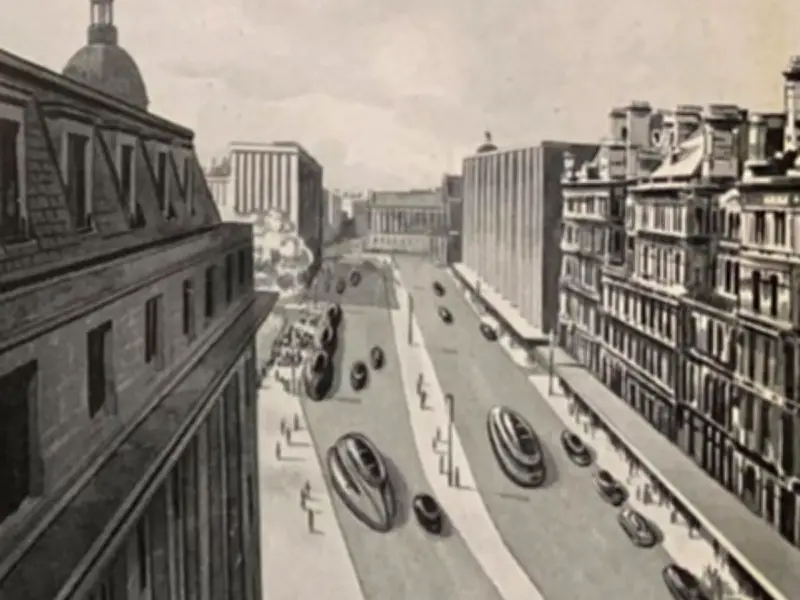
In 1952, Paul S. Cadbury, a member of the famous chocolate-making family, published a book titled Birmingham - Fifty Years On, filled with predictions for what the city would look like by 2002. Now, over seven decades later, we revisit his forecasts to see which ones hit the mark and which missed.
Population and immigration
Cadbury correctly predicted that Birmingham's population would decrease from around 1,100,000 in 1952 to about 1 million by 2002. Official figures show the population stood at approximately 977,000 in 2002. However, by 2026, it has rebounded to around 1,190,000. He attributed the earlier rise to 'excess immigration' driven by plentiful jobs in various industries, and noted government plans to decentralise employment.
Demolition of old houses
Cadbury foresaw the complete eradication of back-to-back and tunnel-back terraced houses, which he termed 'slums'. This came to pass, with many demolished by the 1970s to make way for new builds. He also predicted that 'internal fittings and lighting and heating will be very different'—a correct forecast, as central heating became widespread only later.

Factories and industry
He suggested that factories would survive, grouped into 'industrial zones' in modern multi-storey buildings. While factories still exist, many in the city centre have been converted into residential spaces, a shift he did not anticipate.
Shopping and Grand Central
Cadbury predicted that city centre shops would remain vital, with lifts enabling multi-storey shopping. He correctly foretold 'a large new area on top of New Street station'—Grand Central opened in 2015. However, his belief that Corporation Street would be a shopping hub has not held true. He also envisioned self-service shops and cafeterias replacing traditional grocers and tea shops, which is evident today.
Ring roads and traffic
Cadbury predicted three double-carriageway ring roads, with tunnels under the city centre. The Aston Expressway and Queensway tunnels were built, and New Street became a pedestrian-priority shopping street. He also foresaw Colmore Row as a 'bus station of the city', which partially materialised.
New Street station underground
He correctly predicted that railways would be electrified and stations underground, clean and warm. While New Street station is now largely underground and cleaner, delays remain a common complaint. The shopping centre above the station also came to fruition as Grand Central.
Birmingham Airport
Cadbury predicted the airport (then Elmdon) would become far more important. It was renamed Birmingham International Airport in 1984 after a new terminal opened. He noted it would always be a branch line compared to London, but BHX has grown significantly.
Parks and green spaces
He forecast 7,000 acres of public parks by 2002, up from 3,500 acres in 1952. Today, Birmingham boasts over 8,000 acres of green space. He also correctly anticipated green belt areas like the Lickey Hills, Clent Hills, and Sutton Park.
New cathedrals
Cadbury predicted two new cathedrals (Anglican and Catholic) would be begun by 2002. This did not happen; St Chad's and St Philip's remain the city's cathedrals. However, Birmingham saw the UK's first and largest Gurdwara in Smethwick (1961) and the second purpose-built mosque in Highgate (1970s).
Theatres and entertainment
He envisioned a new municipal theatre and an entertainment precinct south of the train station. While no new civic theatre was built, the Arcadian, Gay Village, and Chinatown later developed in that area. Station Street, however, has struggled.
Population age and poverty
Cadbury predicted an older population with fewer children, but Birmingham is one of Europe's youngest cities. He expressed hope that the Welfare State would improve standards but warned against dulling 'finer instincts'. Today, Birmingham has the highest child poverty rate among major UK cities, yet its residents remain resilient.
Conclusion
Cadbury concluded that while Birmingham might not be 'the city of our dreams', it would be 'a pleasant place in which to live and work'. Many of his predictions were remarkably accurate, though some fell short. The city continues to evolve, shaped by both his family's legacy and broader social changes.