Solihull Council has published a draft local plan that sets a target of building more than 20,000 homes in the borough by 2043. The 200-page document will be considered by senior councillors at a cabinet meeting next Tuesday (September 29).
The draft plan outlines how the authority could develop up to 2043, with housing a major issue as Solihull faces pressure to meet the government's target of building 8,500 new homes before 2029. The plan includes policies responding to significant changes to national planning policy since the previous 2020 plan was published, after a former draft plan had to be withdrawn.
Sharp increase in housing requirement
The plan states: “Whilst the 2020 plan sought to accommodate a need based on an annual requirement of 816 dwellings per annum (dpa), the change to national planning policy increases this to 1,289 dpa - a 58 per cent increase.”

One of the policies reads: “The council will identify sufficient land for at least 13,096 net additional homes, to ensure sufficient housing land supply to deliver 21,913 additional homes in the period 2026-2043.”
The “broad locations” for more than 8,000 homes have not yet been revealed, with a note saying these are to be given to cabinet members prior to the cabinet meeting.
Pressure on planning system and green belt
The draft plan notes that currently around 20 planning applications for major residential development are awaiting determination, with these applications containing proposals for more than 4,000 dwellings.
Two thirds of the borough is located in the green belt, and protection of this area has become a major issue. The plan says the “generally open and undeveloped nature of the following vulnerable gaps will be protected”, listing gaps between: the urban edge and Dickens Heath; the urban edge and Cheswick Green; Dickens Heath and Tidbury Green; Dickens Heath and Cheswick Green; and Cheswick Green and Blythe Valley Park.
Railway station development and major schemes
A recent change in national guidelines promotes development around well-connected railway stations. The draft plan says “an assessment on a station-by-station basis has been undertaken to identify the likely capacity that could come forward from sites within 1,000m of railway stations” - with this figure being 8,219 homes.
However, it stresses: “Whilst development of land within 800m walking distance of a railway station may be considered as appropriate development, development of land between 800m and 1,000m (or even beyond) would need to be based on very special circumstances.”
Major developments mentioned include Mell Square's redevelopment, providing up to 1,600 residential units; 469 dwellings in the Heart of Solihull quarter; and 100 dwellings in Chelmsley Wood town centre.
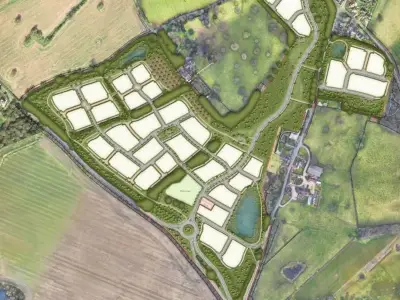
On the 340-acre Arden Cross - proposed to become a mixed-use site around the new HS2 Interchange station - the plan says: “The 2021 masterplan for the site indicated the creation of a new residential community delivering up to 3,000 new homes. The revised programme for HS2 is likely to have implications on the timescales. At this stage it is considered prudent to continue to acknowledge the residential component of the development will not be completed within the plan period, and for land supply purposes a total of 1,600 is considered a reasonable expectation within the plan period.”
Next steps and consultation
The draft plan is set to go before a specially arranged meeting of the authority's cabinet next Tuesday (September 29). If approved, it will go to full council for approval and, if rubber-stamped there, residents and other interested parties would then have six weeks to submit their comments. Following this, the council will submit the plan to the government for independent examination.
Councillor Andrew Mackiewicz, the authority's cabinet portfolio holder for climate change and planning, said: “This plan seeks to protect the features that make Solihull a special place to live, such as the green belt and Meriden Gap; whilst meeting government targets and providing homes and jobs suitable for all – in a managed and sustainable way. This latest version incorporates the feedback from the consultation held earlier in the year, as well as responding to the significant changes to national planning policy over recent years.”