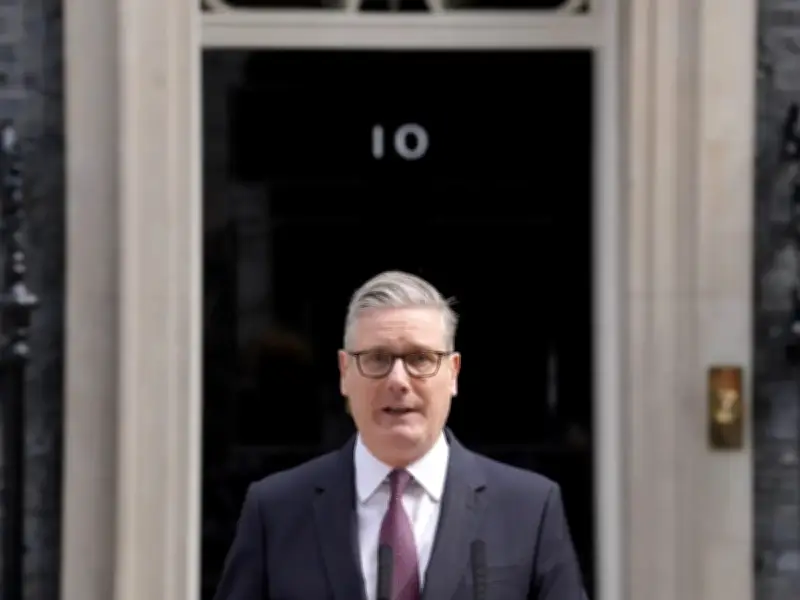
Sir Keir Starmer has confirmed his resignation as Prime Minister, announcing he will step down on June 22 after a weekend of soul-searching at Chequers. The announcement came during a hastily scheduled press conference from Downing Street on Monday morning, where he was accompanied by his wife Victoria to cheers and applause from his team.
Resignation Details and Leadership Contest
Starmer stated that the process for selecting a new leader will begin on July 9, triggering a leadership contest before Parliament's summer recess ends and the party conference in September. He has informed the King of his decision and will resign as leader of the Labour Party, ensuring a new Labour leader is in place by the time Parliament returns in September.
Speaking outside Number 10, Starmer said: "The question is whether I'm the best person to lead this party into the next general election - I accept the answer with good grace. Every decision I have taken has been about the good of the country."
Starmer's Achievements and Legacy
In his resignation speech, Starmer highlighted several achievements of his government, including an economy growing faster than peers, wages rising faster than inflation every month since Labour came to power, investment secured, infrastructure built, and an end to austerity. He noted the fastest fall in NHS waiting lists in 17 years, the biggest improvement in rights for workers and renters in a generation, and the largest uplift in defence spending since the Cold War. He also pointed to falling small boat crossings, closing asylum hotels, protecting young people from social media, and lifting half a million children out of poverty.
Deputy Prime Minister David Lammy and other staff were present outside Downing Street to listen to the speech.
Political Stability Concerns
Former cabinet secretary Gus O'Donnell, interviewed on the Today programme, expressed concern about political stability, noting that Starmer would be the seventh Prime Minister in a decade. He suggested that mid-term changes in leadership could be problematic if a new PM is elected on a manifesto that no longer fits changing circumstances, such as the Middle East war and inflation spike. O'Donnell stated: "It will be our seventh [PM] in a decade. I do think we need to think about... what's the problem? And it quite possibly could be that they're elected on a manifesto that doesn't work given the circumstances have changed."