Freshly declassified documents have revealed that the White House explicitly sought to avoid a photograph being taken of President Bill Clinton shaking hands with Sinn Féin leader Gerry Adams during a pivotal reception in Belfast in 1995.
Diplomatic Manoeuvres for a Historic Visit
The annual release of papers from the National Archives in Dublin has shed new light on the intricate planning behind President Clinton's landmark trip to the island of Ireland in November 1995. The records detail extensive coordination between Irish and American officials, covering everything from accommodation to the president's disputed Irish ancestry.
As part of the visit, a major reception was organised at Whitla Hall in Queen's University, Belfast, for 30 November 1995. Originally, US officials wanted to limit the event to 120 guests. However, the British side, as noted in a letter from Irish diplomat David Donoghue, insisted that the then Secretary of State for Northern Ireland, Sir Patrick Mayhew, should host. This was agreed, and the guest list ballooned to 300 people.
Mr Donoghue wrote that the expanded list served an "ostensible" purpose of letting the president meet more people. The real aim, he stated, was to "de-emphasise the political nature" and create a broader community event, making it easier for unionists to attend alongside Sinn Féin.
The 'Pod' System and a Forbidden Handshake
The reception was meticulously organised. Guests were to be arranged in political "pods"—a UUP pod, an Alliance pod, and so on—based on electoral strength, similar to a Buckingham Palace reception. It was within this controlled environment that a key instruction was relayed.
According to the documents, Peter Bell of the Northern Ireland Office indicated "the Americans would prefer to avoid a handshake photograph between the president and Adams." This caution extended to one-on-one meetings; while talks with SDLP leader John Hume and UUP's David Trimble were planned, there was a "general US reluctance" for private sit-downs with Adams, Ian Paisley, or John Alderdice.
This sensitivity stemmed from the huge symbolic weight of such gestures. Clinton and Adams had first shaken hands at the White House in March of that year during St Patrick's Day events—but only after photographers had been ushered out of the room. The New York Times reported that British Prime Minister John Major had pressured Clinton not to give Adams a warm public embrace.
The Inevitable Handshake and a 'Fantasy' Ancestry
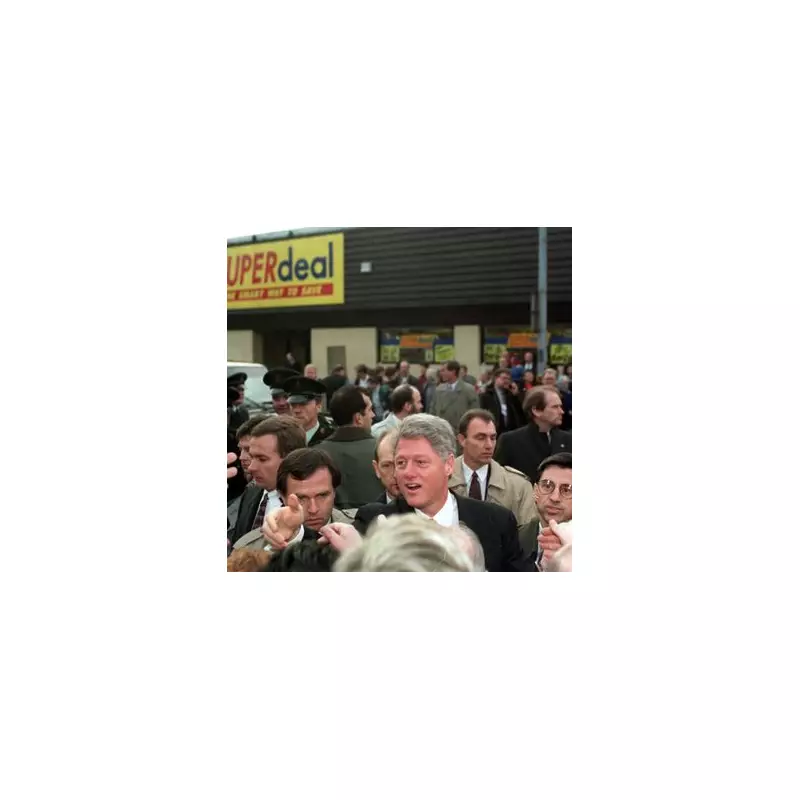
Despite the planning, a historic handshake was captured on camera. On the morning of the Belfast reception, 30 November 1995, Clinton met Adams on the Falls Road. As he exited his car, the president paused to shake the Sinn Féin leader's hand—a moment deliberately captured by an official White House photographer. Clinton later reflected that the handshake felt like a "big deal" and that "the pavement was about to crack open."
The documents also reveal a fascinating subplot concerning President Clinton's claimed Irish roots. A genealogical expert, Sean Murphy, was commissioned to investigate assertions that Clinton had ancestors from Co Fermanagh named Cassidy.
Mr Murphy concluded that the link to a "Luke or Lucas Cassidy of Roslea, Co Fermanagh, appears to be based largely on fantasy." He suggested the president's Cassidy ancestors were more likely Protestant emigrants from Ulster. Despite this expert dismissal, the White House remained "still interested in using the Cassidy connection in a low-key way," which culminated in a visit to Cassidy's Bar in Dublin during the trip.
These archival insights underscore the immense diplomatic tightrope walked during the nascent Northern Ireland peace process, where every gesture, photograph, and genealogical claim was loaded with political significance.