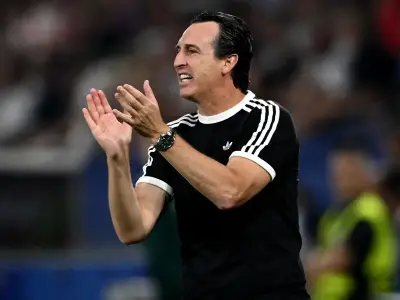
Aston Villa are 90 minutes from lifting their first silverware in three decades, since the likes of Savo Milosevic, Andy Townsend, and Ian Taylor overpowered Leeds United at Wembley. There have been cup finals since, all of them lost, even promotion was delivered via the play-offs, and more recently Unai Emery's men have come up short in the semi-finals. That was until they swept aside Nottingham Forest to reach the Europa League final in Istanbul a week today.
Emery is on the brink of winning the competition for the fifth time, Villa eye their second European trophy, and their 22nd major honour. Yet it is their opposition in the Besiktas Stadium who feel like they have already won. Step forward German outfit SC Freiburg, seventh in the Bundesliga, scrabbling to qualify for the UEFA Conference League next season, and without a cup to their name. Ever.
After a few years going up and down, Freiburg have only been an established top flight team for the last ten seasons, and it is probably fair to say it is only now they have come into the consciousness of most football fans in this country. Which is why BirminghamLive decided to speak to David Weigend, Sports Editor at Badische Zeitung for his insight into where they have come from, how they have progressed, who they are now, and what to expect on May 20.

Freiburg's Ownership
"They don't have a financier like Villa or a billionaire," David says. "It's a classic members club, and the money the club makes is from selling their own players. They have a very good scouting section. They look for talents, for example, from the French second league, or like Johan Manzambi, a youth guy from Servette. They saw something in him. He has played now for two years in Freiburg, and I guess he's valued at €40 million. Kevin Schade came out from the youth system in Freiburg, and they raised him up and sold him to Brentford. That's the concept of Freiburg: making talents great and selling them for bigger money. The squad value is around €191 million, about three times lower than Villa."
Freiburg's Head Coach
Julian Schuster played for the club for ten years and stayed after retirement. He became a reliable part of the legendary Christian Streich's back-room team, and in 2024 was promoted to the top job when Streich stepped down. "Somehow the logical step that Julian Schuster would be the follower," David says. "His minus was he hadn't any experience as a pro coach; he was the connection coach between the youth team, the second team, and the first team. But he knew the way of working in Freiburg because he was a player for a long time, and he had – we say here – the genes of Freiburg. But nobody expected that after two years as head coach there would be such a success like going to the Europa League final. He is a very nice guy, I have known him personally for years, and he is the same way to everybody, it doesn't matter whether it is a small fan or any guy in the streets who wants to talk with him; everyone loves him in Freiburg because he's so easy to speak to. He is a really good coach too, you know; he demonstrates it now."
The Freiburg Style
Schuster's team plays a 4-2-3-1, similar to Villa. Despite having the hulking, 6ft 5ins Igor Matanovic up front, they choose to play from the back, building by working the ball upfield. They have two main qualities: a good defence built around a settled central defensive partnership, and Schuster's belief they can win games if they don't concede many goals. The other is their spirit. "They don't make a lot of goals out of their chances, but on the other hand they showed two times that they have really good comeback qualities. You see against Genk [in the Round of 16], the first game they lose and then they came back 5-1 in Freiburg. The same now against Braga [in the semi-final]; they lost in Portugal 0-1 and they came back now with a 3-1 win in Freiburg. But they have problems against teams with a good defence I guess, or with teams who press early and play with tempo."

Freiburg's Key Men
Goalkeeper Noah Atubolu is another who has come through the youth set up, and after three seasons in the first team is now being linked with a move to the Premier League – Brighton are one option. The 23-year-old is also hoping for a call-up to this summer's World Cup. In defence, 'the chief' is Matthias Ginter, another local player. David says: "He's one of the most identifiable players because he comes from the youth from Freiburg. He is a central defensive player, but he can score with his head as well. His partner is Philipp Lienhart, an Austrian national player, and on good days you can say that Ginter and Lienhart are one of the best central defensive duos in the Bundesliga." They are complemented by the versatility of Philipp Treu, a full back who can play both left back and right back.
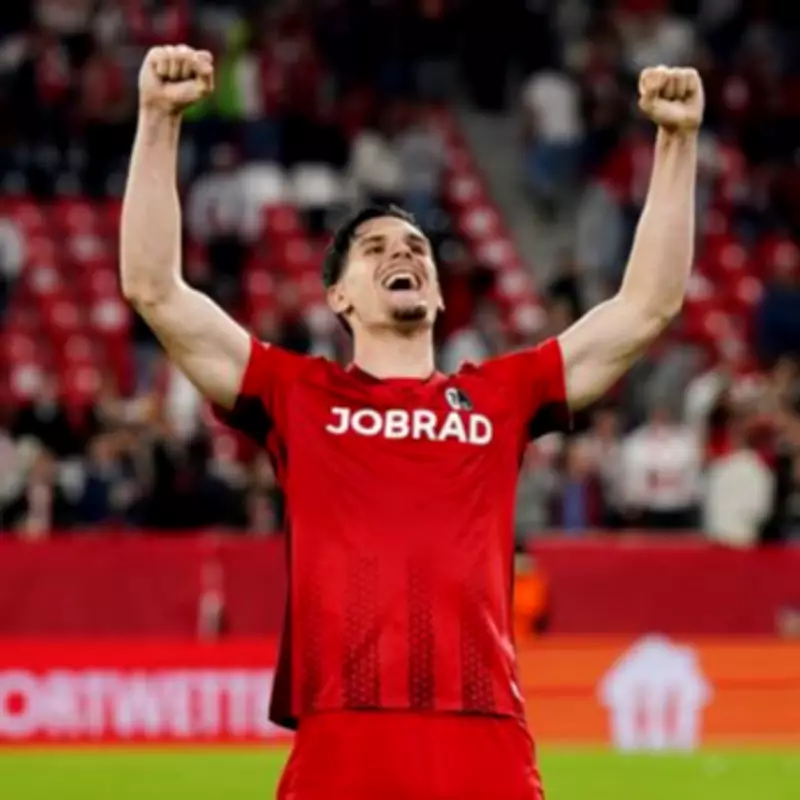
In midfield, Maximilian Eggestein is a No. 6 who has started every league match and is the brain of the game. "The shooting star of this season is Johan Manzambi at No. 10. If he has a good World Championship with Switzerland, I guess that he might leave the club too after the summer because he is a very good player. He has a very good technique with the ball, he can score, but he's still very young, and in the Bundesliga season there were certain phases of the year where he didn't perform so well, so the fans wish a lot that he stays another season." Out wide, Vincenzo Grifo is the club's record scorer with good delivery from set-pieces, albeit at 33 years old he does not get back to help in defence the way he supports the attack. And then there is big Matanovic: "He is not a technical player, but he's like the classic bull in the box. He's very big. He came last summer from Eintracht Frankfurt, and I guess his value has increased a lot because he scored so much this season." A return of 14 goals in all competitions, three in the Europa League, makes him Freiburg's focal point.
Freiburg's Good – and Bad
David says: "They have a quite good defence. Earlier this season Julian Schuster's priority was defending well and thinking that you would win games that way. In offence, they are not that strong. They scored a lot in Europa League against lower opponents, but this is not the right interpretation." Indeed, they have scored just 47 goals from their 33 league matches – compared to Bayern's 117, but even removing Vincent Kompany's outliers from the equation, Freiburg are the lowest scorers in the top eight. The other issue is depth and a habit of conceding late in games, such as a month ago when Bayern scored twice in injury time to win 3-2. "Yeah, this was very hard," David admits. "Then the cup semi-final against Stuttgart, in the 120th minute they got a goal against them. In Braga there was the goal against them in 90+4 minutes. They lose power over the game because they play so intensively." An intensity that is not maintained once the substitutions start to fly. They will also be without Japanese play-maker Yuito Suzuki and key midfielder Patrick Osterhage, both of whom are injured. "If Villa are a very fast team, there might be a problem that Freiburg will be overrun."
Freiburg's Big Picture
David admits that actually winning the Europa League would be something of a miracle. "You already saw it at the second game against Braga, all the fans run onto the field, there was a party all night. They are now already planning a greeting or a reception for the team anyway. I think 90% or 80% they will lose. It would be an absolute surprise if Freiburg wins, but if they win or lose, it doesn't matter. They will make a big reception of the team in the centre of the town, and there will be a public viewing in Freiburg with 15-20,000 people watching the game. There's a big euphoria here; up to now the greatest success for the team was the cup final in 2022 when they lost against Leipzig. It is anyway a great success for the team that they reached the final." In Freiburg there is hope, at Villa it is expectation.