RAF Typhoons Scrambled as Suspected Russian Bomber Approaches UK Airspace
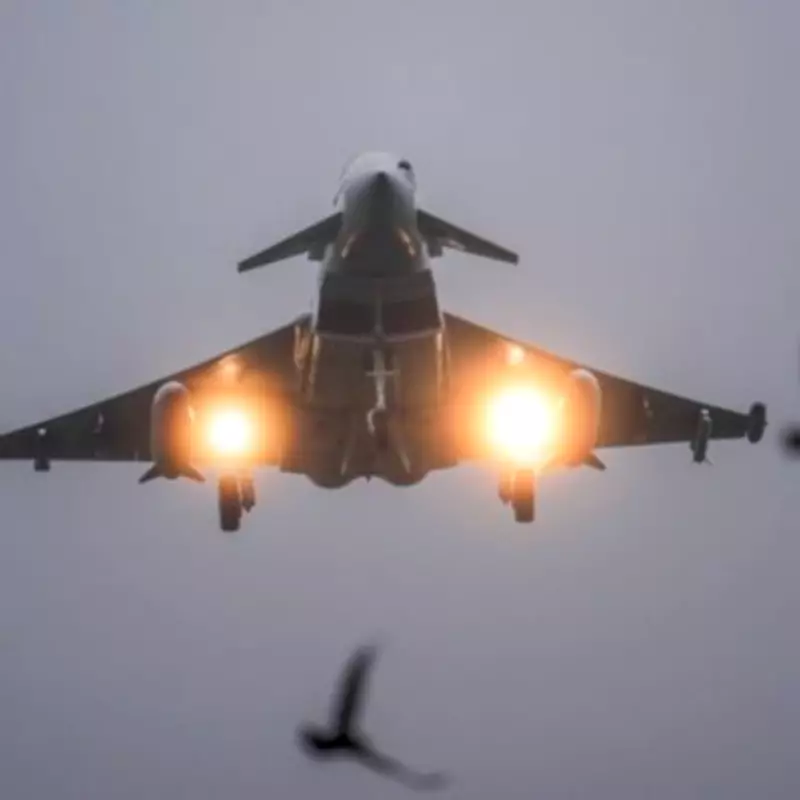
In a swift response to potential aerial threats, two RAF Typhoon fighter jets were scrambled from RAF Lossiemouth in Scotland on Tuesday evening. A Voyager refuelling aircraft also took off from RAF Brize Norton in Oxfordshire to support the operation. The jets headed towards the Shetland Islands as reports indicated a suspected Russian bomber was nearing British airspace.
According to sources, the unidentified Russian warplane remained outside UK airspace, and the Typhoons returned to their base without needing to intercept it. This deployment was part of a broader NATO response to monitor Russian military movements, highlighting ongoing vigilance in the region.
Historical Context and Recent Incidents
This event echoes a 2020 incident where six Typhoons intercepted two Russian Bear-F Tu-142 long-range aircraft approaching the UK. In recent weeks, Russian warships and submarines have been active near UK waters, raising security concerns.
Earlier this month, Defence Secretary John Healey disclosed that the UK and allies monitored a Russian Akula-class nuclear-powered attack submarine and two spy submarines from Russia's Gugi deep-sea research programme. These vessels were tracked over vital undersea cables in the North Atlantic for a month before withdrawing.
UK Response to Russian Activity
In response to this increased activity, a Royal Navy warship and RAF P-8 Poseidon aircraft were deployed to counter what Healey described as "malign" actions by Moscow. He stated that Vladimir Putin poses "the primary threat to UK security" and attempted to exploit global distractions, such as the Iran war.
At a Downing Street press conference, Healey directed remarks at Putin, warning: "We see your activity over our cables and our pipelines, and you should know that any attempt to damage them will not be tolerated and will have serious consequences."
Operational Details and Personnel Involvement
The month-long operation involved 500 British personnel, with RAF crews conducting over 50 sorties using P-8 aircraft, supported by allies like Norway. Healey confirmed that the Akula submarine retreated after being closely tracked, while the two Gugi submarines were monitored until they left UK waters.
This incident underscores the ongoing strategic challenges in the North Atlantic and the UK's commitment to safeguarding its airspace and maritime interests through coordinated NATO efforts.