A significant barrier to electric vehicle ownership is being highlighted, with over 40% of UK households affected because they lack access to a private driveway. This issue is forcing many drivers to remain with petrol and diesel cars, despite the potential running cost savings of switching to electric.
The Charging Cost Divide
New data reveals a stark divide in running costs between EV drivers with and without off-street parking. A survey by the Electric Vehicle Association for England (EVA England) found that more than 90% of current EV drivers have a driveway. Among this group, 87% report their electric car is cheaper to run than their previous fossil fuel vehicle.
However, for drivers without a driveway, that figure plummets to just 50%. The primary reason is the high cost of public charging compared to domestic rates. Charging at home under the electricity price cap averages around 26p per kilowatt-hour (kWh), with smart tariffs sometimes as low as 7p. This can save drivers roughly £1,000 annually.
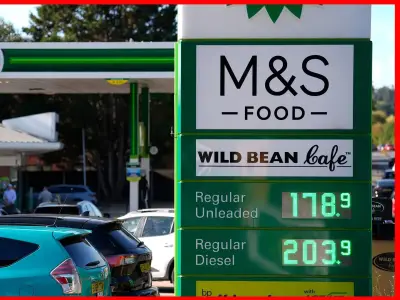
In contrast, using public infrastructure is far more expensive. The average cost at a slow or fast public charger is about 52p per kWh, soaring to approximately 76p per kWh for rapid and ultra-rapid chargers. The RAC illustrated that a rapid charge from 10% to 80% for a typical battery could cost around £40, providing about 168 miles of range.
National Survey on Cross-Pavement Solutions
In response, EVA England has launched a national survey to capture the real-world experiences of drivers without driveways. The focus is on understanding the challenges of accessing affordable home charging and the potential for cross-pavement charging solutions, where cables are safely routed from a home to a parked car on the street.
The initiative aims to provide vital evidence to shape government policy. This follows recent progress in Parliament, where commitments were secured by Baroness Pidgeon to address the charging inequality.
"Recent progress in Parliament shows what can be achieved when drivers’ experiences are taken seriously," said Vicky Edmonds, CEO of EVA England. "This survey is about making sure drivers without driveways are heard as Government takes these commitments forward."
Unlocking Fair Access to Electric Transport
Industry experts stress the urgency of solving this problem. Michael Goulden, Co-founder of Kerbocharge, stated, "For too long, over 40 per cent of UK homes have faced a barrier to EV ownership simply because they don't have a driveway."
He warned that the current situation leaves potential EV drivers with poor choices: paying high prices at inconvenient public points or continuing to drive polluting petrol and diesel cars, which worsen the climate crisis.
The government is now consulting on measures to lower barriers, including potentially removing planning permission requirements for home chargers. The evidence from EVA England's survey will be crucial in informing these changes to ensure a fair and effective transition to electric transport for all households, regardless of their parking situation.