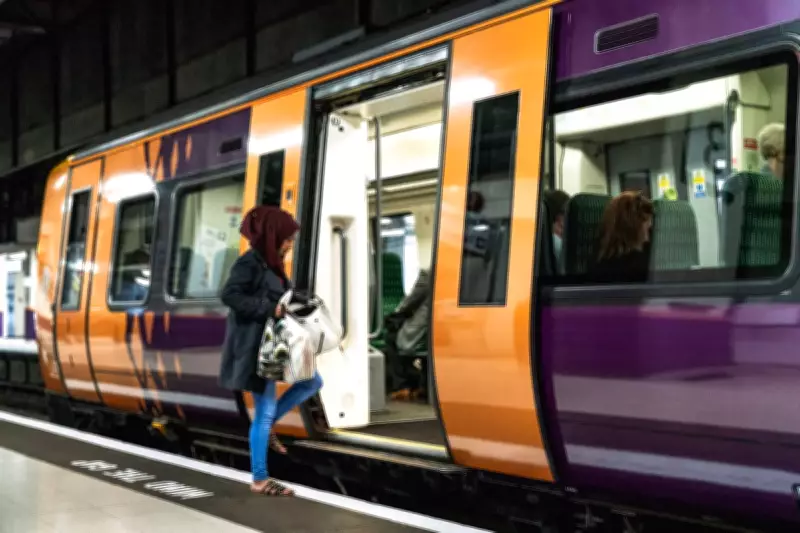
West Midlands Trains has officially entered public ownership as of Sunday, 1st February 2026, marking a significant shift in the operation of commuter and local services across the West Midlands region. The transfer concludes the contract between the government and Transport UK Group and Mitsui & Co, with management now under DfT Operator Ltd (DFTO), a government-owned holding company. For the vast majority of passengers, this change may initially seem inconsequential, as the primary concerns remain affordability and reliability of services.
What Does Public Ownership Mean for Passengers?
In the short term, very little is expected to change for users of West Midlands Trains. The company will continue to operate under its two trading names: West Midlands Railway (WMR) for commuter and local services in the West Midlands, and London Northwestern Railway (LNR) for services on the West Coast Main Line between London and the Northwest. According to a Department for Transport press release, public ownership aims to improve passenger experience by integrating train operators with infrastructure management, enhancing performance, reducing subsidies, promoting innovation, and boosting satisfaction for both customers and taxpayers.
Historical Context and Background
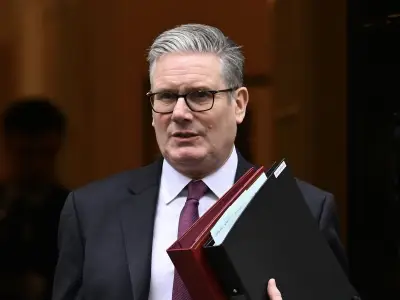
The move to public ownership is part of the Starmer administration's manifesto pledge to renationalise the railways, a promise made during the general election campaign. However, DfT Operator Ltd was not established by this government; it was created in May 2018 under Prime Minister Theresa May and Transport Secretary Chris Grayling. This was to ensure continuity of rail services under section 30 of the Railways Act 1993, should a franchise fail, indicating that even Conservative governments have been willing to consider public ownership when private companies struggle.

Under the Conservatives, four train companies became subsidiaries of DfT Operator Limited: London North Eastern Railway in June 2018, Northern Trains in March 2020, Southeastern in October 2021, and TransPennine Express in May 2023. Since taking office in July 2024, then Secretary of State for Transport Louise Haig announced that DFTO would manage train companies transitioning into what will be collectively known as Great British Railways (GBR), a concept first proposed in a 2021 white paper under Boris Johnson. West Midlands Trains is the fourth company to join this process, following South Western Railway in May 2025, c2c in July 2025, and Greater Anglia in October 2025, with six more scheduled over the next two years.
From British Rail to Privatisation and Back
Cynics might argue that this government is effectively recreating British Rail (BR), the public sector organisation nationalised in 1947 under Clement Atlee's Labour government. BR was created to wrest control from private companies accused of not operating in the public interest, especially critical during and after the Second World War for transporting people and goods. However, post-1945, rising car ownership and declining passenger use led to significant losses, prompting initiatives like the 1955 "Modernisation Plan" and the controversial 1963 Beeching Report, which resulted in widespread line closures.
Christian Wolmar's book, British Rail: A New History, highlights how BR, starved of funds, relied on staff dedication and a 'make do and mend' mentality, often becoming the butt of jokes about reliability and service quality. In the 1970s and 80s, BR struggled to match European rail standards, with investment focused on prestige projects like the InterCity 125, while cross-country lines suffered. Eventually, in 1997, Prime Minister John Major privatised BR, leading to the current franchise system, which has seen mixed results, including fatal accidents and financial struggles.

Implications for the Future
Advocates of public ownership argue that running railways is too complex and expensive for private companies with limited resources and short-term profit goals. The transition to public control for West Midlands Trains is seen as a step towards the vision of Great British Railways, aiming to create a more efficient and reliable system that incentivises train use over cars, reducing congestion in the West Midlands. However, past experiences, such as the failures of British Rail and the challenges of privatisation, suggest that success will depend on long-term investment and strategic planning.
The current government stresses its commitment to public service investment but cites financial constraints from the previous administration. There is a risk of policy flip-flopping between governments, undermining stability. A dedicated, cross-party long-term strategy is needed, along with radical thinking and innovation in transport, to achieve sustainable and efficient systems. While past trends are not encouraging, there is hope that public ownership will improve commuter experiences in the West Midlands for the first time in nearly 30 years.
Ultimately, the proof will be in tangible changes: improved efficiency, reliability, and incentives for passengers to choose trains over cars. As infrastructure is essential for economic benefits and societal function, the success of this transition will be closely watched by passengers and policymakers alike.