Electric Vehicle Owners Enjoy Major Charging Cost Reductions
Electric car drivers across the UK are experiencing substantial financial benefits as ultra-rapid public charging costs continue their downward trend, creating significant savings compared to traditional fuel vehicles. New data reveals that off-peak ultra-rapid charging prices fell by 10 percent during December alone, translating to a reduction of 5p per kilowatt-hour.
Comparative Fuel Cost Analysis
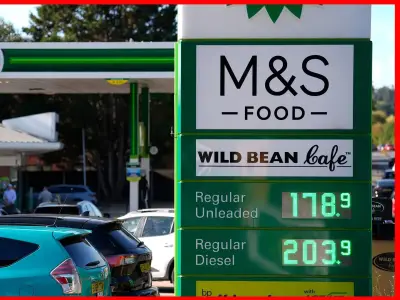
Currently, the average cost for drivers to charge their electric vehicles at ultra-rapid charging stations stands at 45p per kWh. This represents a notable advantage when contrasted with petrol prices, which decreased by just 4p per litre to reach 133.5p over the past eight weeks – equating to an approximate three percent saving per litre.
Wholesale petrol costs have seen a more substantial drop of 7p per litre, which translates to 8.4p at the pump when including VAT. However, this reduction still leaves petrol and diesel drivers at a considerable disadvantage compared to their EV counterparts.
Substantial Per-Mile Savings Identified
The AA has highlighted that these charging cost reductions are providing electric vehicle owners with what they describe as a "significant" pence-per-mile saving when compared to drivers of petrol and diesel vehicles. To illustrate this financial advantage, consider that EV owners will typically pay £31.60 to add an 80 percent charge to their vehicles using ultra-rapid chargers.
In stark contrast, petrol drivers would need to spend £43.69 for an equivalent amount of fuel – creating a substantial £12 difference between the two charging methods. This growing price gap is making electric vehicles increasingly attractive from a running cost perspective.
Industry Expert Commentary
Jack Cousens, head of roads policy for The AA, commented on these developments, stating: "The cuts to ultra-rapid peak and off-peak rates would've been welcome to those travelling around at Christmas, especially if they got themselves caught in lengthy jams."
Cousens further analysed the pricing trends, noting: "Reflecting on how prices have changed since 2023, it is clear that chargepoint operators offering peak and off-peak rates are the most competitive, whereas flat rate providers have seen steady increases over the same period."
Policy Recommendations for Further Savings
The AA has proposed specific policy changes that could enhance these savings even further. Cousens emphasised: "Cutting VAT on public charging is an easy win, and we urge the Chancellor to carry this out at the earlier opportunity. Cheaper charging away from home will help give more confidence to those drivers considering making the switch to an EV."
Should VAT be equalised to 5 percent across the entire public charging network, ultra-rapid costs could potentially fall to approximately 66p/kWh. This adjustment would make the cost of charging electric vehicles even more competitive compared to 2023 prices, potentially accelerating the transition to electric mobility across the United Kingdom.
These developments represent a positive trend for current EV owners while simultaneously providing compelling financial incentives for drivers considering the switch from traditional combustion engine vehicles to electric alternatives.