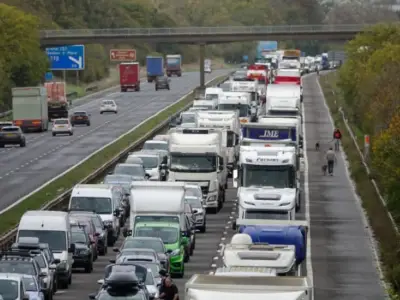
AA Issues 'Catastrophic' Warning Over Smart Motorways in England
The AA has issued a stark warning about England's smart motorways, describing them as a "catastrophic waste of time, money and effort" following the publication of long-awaited official evaluations. The motoring organisation's criticism comes as data reveals most schemes have been rated as poor value for money.
Evaluation Results Reveal Widespread Concerns
National Highways published 16 post-opening project evaluation reports on Friday, February 6, covering smart motorway schemes across England. Of the 11 motorway projects evaluated, only two received positive ratings, with the majority being assessed as "poor" or "very poor" in terms of value.
The evaluations specifically examined schemes that converted hard shoulders into running lanes on major routes including the M1, M4, M6 and M25. These projects, designed to increase capacity and reduce congestion, have come under increasing scrutiny in recent years.

AA President Delivers Scathing Assessment
AA President Edmund King delivered a particularly damning verdict on the smart motorway programme. "This has been a catastrophic waste of time, money and effort," he stated. "Many of the schemes have slower journeys which causes traffic jams, loses the country cash and worsened the safety record of motorways."
King highlighted what he sees as a better alternative: "Motorways which have been widened, the hard shoulder kept and safety technology added have proved the most successful." He called for the return of hard shoulders to "help give confidence to drivers, both now and in the future."
Transport Campaigners Echo Safety Concerns
Transport Action Network director Chris Todd expressed serious reservations about the evaluation reports. "The reports display a remarkable lack of curiosity over how the danger has increased from vehicles stopped in live running lanes," he commented. "They raise more questions than they answer."
This criticism reflects ongoing concerns about the safety implications of removing hard shoulders, which traditionally provided a refuge for broken-down vehicles.
Official Defences of Smart Motorway Programme
Despite the negative evaluations, National Highways continues to defend the smart motorway concept. Chief customer officer Elliot Shaw acknowledged that the schemes were "on course to deliver benefits, but will not deliver all the originally expected benefits within the 60-year appraisal period."
A National Highways spokesperson maintained that "our latest analysis continues to show that overall, smart motorways remain our safest roads." They emphasised the capacity benefits, stating the schemes are "providing much-needed extra capacity for drivers, helping to reduce congestion and lower carbon emissions."
The Department for Transport also offered support, with a spokesperson noting: "These reports show that smart motorways can make journeys reliable and increase road capacity, so more vehicles can travel safely."
Broader Implications for Transport Policy
The publication of these evaluations comes at a critical time for transport infrastructure planning in England. The stark contrast between the AA's assessment and official defences highlights the ongoing debate about the future of England's motorway network.
With only two of eleven evaluated schemes receiving positive ratings, questions are likely to be raised about whether the substantial investment in smart motorways represents value for taxpayers' money. The debate continues between those advocating for traditional motorway widening with retained hard shoulders and those supporting the smart motorway approach.