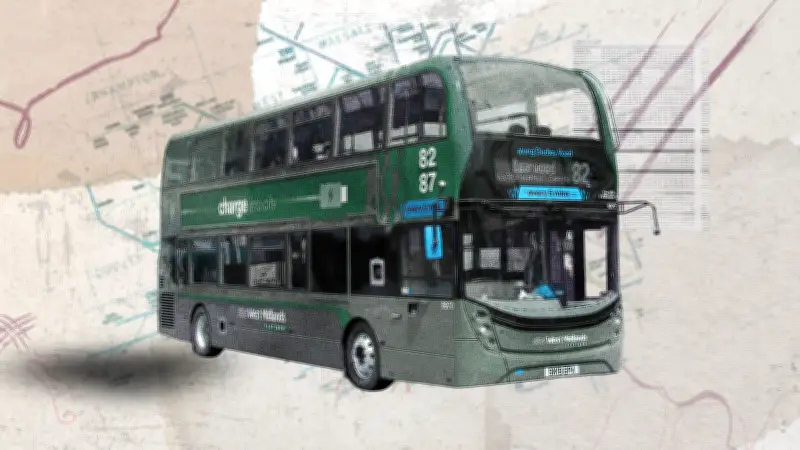
In May 2025, West Midlands Mayor Richard Parker officially signed off on plans to bring the region's buses back under public control, adopting a franchising model similar to London and Manchester. Private companies will still operate the buses, but the West Midlands Combined Authority (WMCA) will set routes and fares. The new services are scheduled to roll out late next year, making this a critical period for implementation.
The Bus Reliance in the West Midlands
Four out of five mass-transit journeys in the West Midlands are taken by bus, making the region heavily dependent on this mode of transport. However, passengers frequently face delays, abruptly terminated services, high fares, congestion, and 'ghost buses' that never arrive. Unlike other regions with more transport options, the West Midlands lacks a comprehensive rapid transit network, relying on a single-line Metro and suburban railways.
The Political Context: Andy Burnham's Bee Network
Andy Burnham, the Greater Manchester mayor, has become the poster boy for bus franchising with his much-feted Bee Network. Although the concept predates his tenure, Burnham championed it, creating a political narrative about delivering a "London-style transport network" that captured public imagination. With Burnham almost certain to become Britain's next prime minister, regional public transport is enjoying a rare national spotlight.
The Productivity Problem
Productivity—the value of goods and services produced per unit of time—is the holy grail of a city's economy. Birmingham, as the economic centre of the West Midlands, must enable easy movement of workers into the city, where high-value service jobs are concentrated. Economists call this 'agglomeration benefits': when businesses, universities, and workers cluster, they become more productive through collaboration and innovation.
In Greater Manchester, massive transport investment has created "something approaching a comprehensive rapid transit network," according to Daniel Timms. This has boosted productivity significantly, benefiting surrounding towns like Bolton and Stockport. In contrast, Birmingham lacks such a system. In 2022, Centre for Cities found that only 34% of Birmingham's population could reach the city centre within 30 minutes, a figure that drops further across the wider region. By comparison, Munich—though smaller and with 1.1 million fewer residents—achieves 73% accessibility within 30 minutes, largely due to its extensive rail network.
Can Parker Deliver?
The question now is whether Richard Parker can replicate Burnham's success both technically and politically. The franchising model offers the WMCA control over routes and fares, potentially improving reliability and coverage. However, the region's historical underinvestment in public transport means the challenge is steep. Better buses could unlock economic growth by connecting more people to jobs and opportunities, but success will depend on execution and public buy-in.