Coventry's Transport Breakthrough Captivates Global Audience
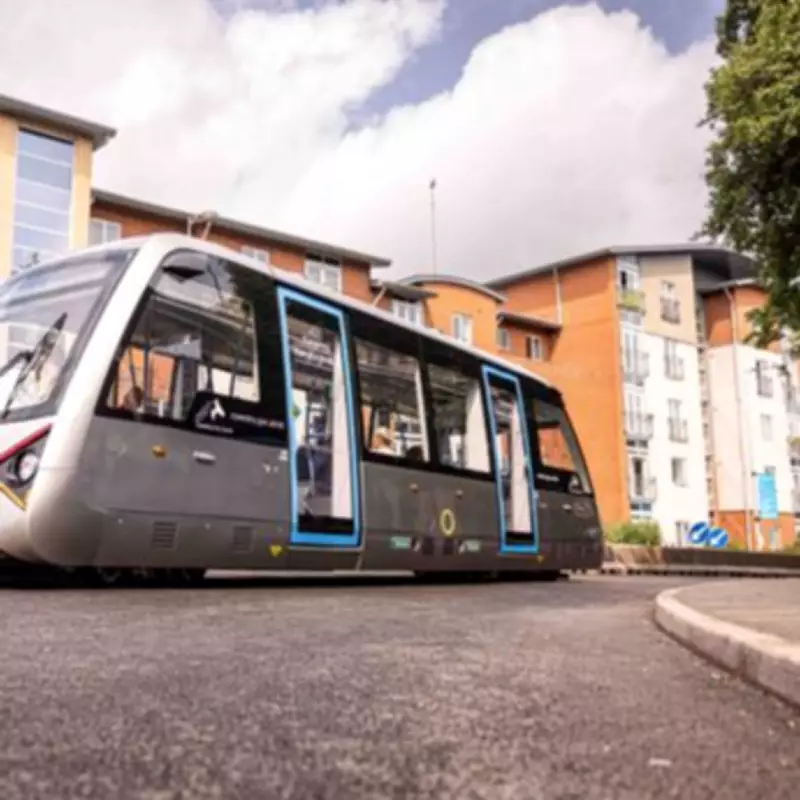
Transport leaders from across the globe are actively seeking access to a groundbreaking transport technology developed in the West Midlands region. Coventry City Council holds partial ownership of the design rights for the innovative Very Light Rail system, which is currently undergoing trials within the city. Council officials report that the system's rapid installation capabilities, cost-effectiveness, and self-operating tram features have generated significant attention from international quarters, including notable interest from Canada.
Game-Changing Technology with Local Benefits
Nicola Small, the VLR programme director who has been involved with the project since its inception, emphasised that this technology represents a potential game-changer for urban transport while simultaneously offering substantial financial benefits to the local authority. During a recent meeting of the council's business, economy and enterprise scrutiny board, she provided detailed insights into preparatory work for the project's next phase, which will establish a connection between Coventry railway station and Coventry University Technology Park.
The proposed 800-metre route will operate within a live traffic environment along Park Road and Mile Lane, representing a significant step forward in urban transport integration. "I have had the privilege of being involved since the beginning," Small stated, "so it is particularly rewarding to witness tangible progress on site after seven or eight years of intensive research and development work conducted behind closed doors."
"Our off-site testing has demonstrated that we have developed something truly transformative for the United Kingdom, with Coventry positioned at the forefront of this transport revolution," she added with evident enthusiasm.
Revolutionary Engineering Design
The council maintains intellectual property rights to the revolutionary trackbed technology, known as the universal slab, which forms the foundation of the VLR system. This innovative engineering solution has generated considerable interest both domestically and internationally. Remarkably, the trackbed measures a mere 30 centimetres in depth, contrasting sharply with conventional systems like the Midland Metro, which require trackbeds more than three times deeper.
"We are experiencing substantial interest from multiple quarters," Small explained, "which presents management challenges alongside our programme delivery responsibilities. We are engaged in discussions with numerous councils and recently hosted a Canadian delegation. Additionally, we have established communications with representatives in Australia and Ireland."
The programme director further revealed collaborative efforts with South Yorkshire, where a renewals programme could provide an ideal testing opportunity in Sheffield, home to the country's heaviest tram. "We have secured support from their chief executive and are currently working with officers to facilitate this testing, hopefully within the next financial year," she confirmed.
Managing Disruption and Maximising Opportunity
Colin Knight, the city council's director of innovation, contributed his perspective on the project's broader implications. "We aspire for this initiative to become an exemplar of urban transport innovation," he asserted. "This represents the concluding phase of our research and development stage, and with the council holding majority intellectual property rights, there exists significant potential for the authority to capitalise on this technological advancement."
Knight addressed practical implementation concerns with characteristic realism. "You cannot make an omelette without cracking eggs, so I will not pretend there will be no disruption during implementation," he acknowledged. "However, we can manage this disruption in a manner far less damaging than conventional tram installation projects."
He drew a compelling comparison with Birmingham's Broad Street, which experienced approximately four years of closure during transport works. "Our approach measures disruption in weeks rather than years," Knight emphasised, "which represents a critical advantage that enhances affordability and increases adoption potential for numerous towns and cities. The opportunities presented by this technology are substantial, and we must ensure we capitalise on them effectively."
The Very Light Rail system underwent initial trials in Coventry during June, marking a significant milestone in the city's transport innovation journey. As international interest continues to grow, Coventry positions itself at the forefront of a potential transport revolution that could reshape urban mobility across the globe.