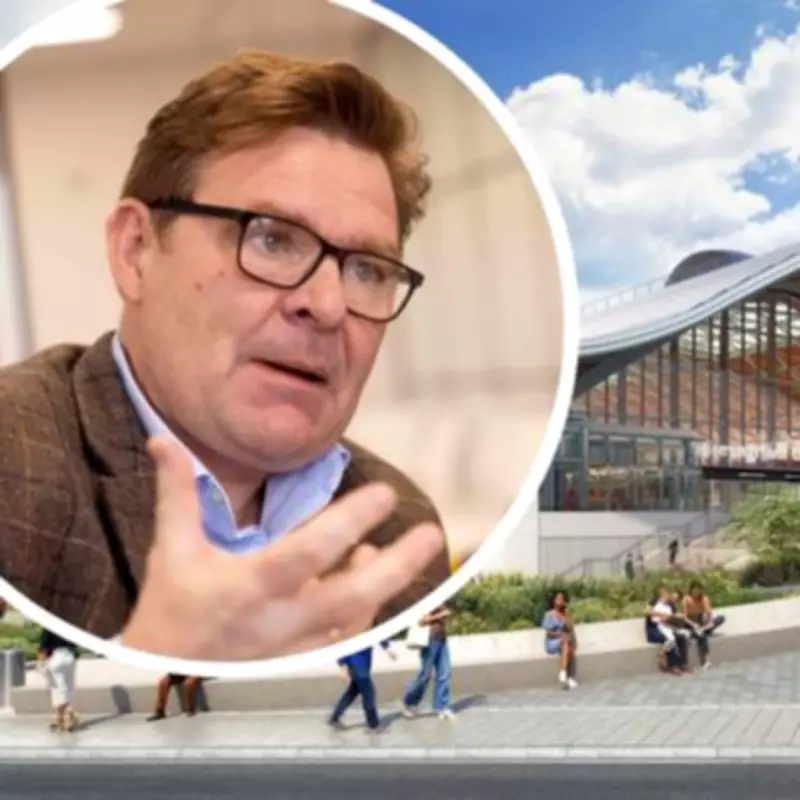
Birmingham Council leader John Cotton has delivered a forceful rebuttal to calls for scrapping the HS2 high-speed rail project, describing such demands as evidence that Reform UK is "not actually a serious political party." The Labour councillor's comments come amid ongoing controversy surrounding the railway scheme, which has faced significant challenges including escalating costs and substantial delays.
A Project Under Scrutiny
The ambitious HS2 initiative has been mired in difficulties, with a recent admission that the target window for operational services between Birmingham's Curzon Street Station and London's Old Oak Common Station—originally set for 2029 to 2033—is no longer achievable. This revelation has intensified public frustration and prompted renewed political debate about the project's future viability and value.
Political Clash Over Rail Investment
Reform UK's deputy leader, Richard Tice, has been particularly vocal in his criticism, labelling HS2 as "wasteful" and disparagingly calling it the "train to nowhere." Tice has argued that terminating the project would save tens of billions of pounds, a claim that has sparked a sharp response from regional leaders invested in the scheme's success.

West Midlands Mayor Richard Parker, also of the Labour Party, countered these assertions last November, warning that abandoning HS2 would "rip out billions of investment already flowing into the West Midlands." He emphasised that such a move might serve political narratives but would fundamentally undermine real job creation and economic growth for local communities.
Cotton's Defence of HS2's Value
In a detailed defence this week, Councillor Cotton articulated multiple reasons for preserving the project. He pointed to the tangible benefits already materialising in Birmingham, urging critics to engage directly with the workforce transforming the city's infrastructure.
"I encourage them to actually go down and meet with the apprentices who have been working at HS2," Cotton stated, highlighting that for many, this represents their first entry into the labour market after extended periods away. He underscored that these individuals are acquiring cutting-edge skills in high-speed rail, a sector he identifies as crucial for future economic expansion.
Economic Transformation and Confidence
The council leader elaborated on the broader economic impact, noting that awareness of HS2's impending arrival is already attracting new business investment to Birmingham. "They've seen the transformation it's delivering," he remarked, arguing that turning away from this progress would be profoundly misguided. Cotton firmly described HS2 as "a really important part of Birmingham's next chapter," essential for the city's continued development and prosperity.
HS2's Reported Benefits and Progress
According to specialist research cited by HS2 in 2024, the project is projected to generate a £10 billion economic uplift in the West Midlands over a ten-year period, alongside providing quicker and more reliable rail journeys. Officials report that major property development and investment are already occurring near new HS2 stations and depots in Birmingham and Solihull, with new landmarks altering local skylines.
Improved transport connections and enhanced business confidence are cited as key factors attracting developers to the region. Furthermore, HS2 has announced significant milestones in workforce development:
- Exceeding its target of creating 2,000 apprenticeships on the project
- Successfully supporting 5,000 unemployed people into work
Leadership Perspectives on the Project's Future
Rail Minister Lord Peter Hendy emphasised the importance of a skilled workforce for national prosperity, expressing confidence in the current efforts to deliver the line as efficiently as possible. Mark Wild, Chief Executive of HS2 Ltd, echoed this sentiment, stating that upskilling initiatives deliver long-term benefits for individuals and the economy, building a pipeline of skilled workers to support UK growth for a generation.

In a recent end-of-year update, Wild acknowledged past failures and committed to a "fundamental reset" to get HS2 back on track. He praised the 34,000 people working daily on the project for their hard work, which has established strong foundations for future progress despite the challenges.
The debate over HS2 continues to highlight deep divisions regarding infrastructure investment, regional development, and political priorities, with Birmingham's leadership positioning the project as indispensable for the city's economic future.