Blue Badge Holders Urged to Review Parking Rules Amid £1,000 Fine Warnings
Millions of drivers who depend on the Blue Badge scheme are being reminded to carefully check the regulations, with authorities warning that misuse could result in fines of up to £1,000. Currently, more than 2.8 million Blue Badges are in circulation across England alone, providing crucial support for individuals with disabilities or significant mobility challenges.
However, officials emphasise that the permit is not a 'licence to park anywhere,' and rules can differ depending on the specific location. Introduced in 1971, the scheme enables eligible people to park closer to their destinations, whether they are driving or travelling as passengers. While it offers various concessions, drivers must still adhere to strict guidelines based on where they are parking.
Where You Can Park with a Blue Badge
According to gov.uk, the scheme applies throughout the UK but operates differently in certain areas, including Scotland and parts of London, as well as in private car parks. Blue Badge holders can park in several locations without charge or time limits, subject to local signage. These include:
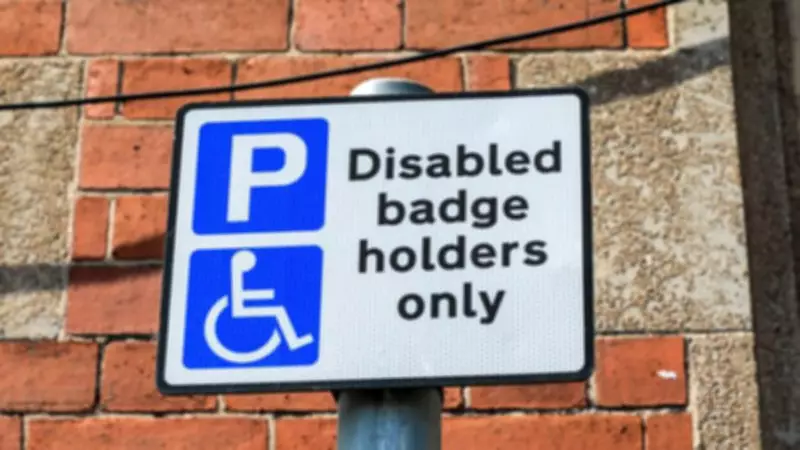
- Designated disabled bays: You can park in designated on-street disabled bays for free. Some may have time limits, so always check the accompanying signs.
- On-street pay-and-display or metered bays: Parking is generally free and unlimited at on-street parking meters and pay-and-disdisplay bays.
- Yellow lines: You can park on single or double yellow lines for up to three hours, provided there are no 'no loading' indicators (yellow kerb dashes). You must display your blue parking clock set to the time of arrival.
In addition, badge holders can usually park in resident parking zones and time-restricted bays. These concessions are designed to make everyday travel more accessible, particularly in busy town centres where parking can be limited.
Variations in Rules by Location
Rules vary depending on the area. For example, in Scotland, there is no three-hour limit for parking on yellow lines, and drivers are not required to display a parking clock, although the badge must still be clearly visible.
Where You Cannot Park with a Blue Badge
There are several locations where parking is strictly prohibited, even with a valid badge, and violations can result in fines or penalties. Holders must not park:
- On pedestrian crossings or zig-zag markings
- In bus or cycle lanes
- In loading bays or taxi ranks
- Where parking would cause an obstruction or danger
Drivers are also warned that rules can change in private or off-street car parks, such as those at supermarkets, retail parks, and hospitals. In these locations, parking conditions are set by the landowner rather than national guidance, meaning free parking is not guaranteed and penalties may still apply if terms are breached.
- Supermarkets and retail parks: These are on private land. Operators are not legally required to offer free parking to badge holders, although many do. Always check the signs to avoid a private Parking Charge Notice (PCN).
- Hospitals: Policies vary by NHS Trust. Some offer free parking for badge holders, while others require you to register your vehicle at reception or pay a reduced rate.
London-Specific Restrictions
Central London operates under its own set of rules. The 'Green Badge' system applies in the City of London, Westminster, Kensington and Chelsea, and parts of Camden. In these areas, standard Blue Badge concessions are often suspended or highly restricted. If you are a Blue Badge holder, you can apply for a Congestion Charge exemption, but this must be done in advance and requires a £10 registration fee.
Misuse and Penalties
To use the scheme correctly, the badge must be displayed clearly on the dashboard, with the front facing upwards so the expiry date and hologram can be seen. A parking clock must also be shown when required. The badge is issued to a person, not a vehicle, and can only be used when the holder is present, either as a driver or passenger, or when they are being dropped off or collected.
Authorities report that misuse of Blue Badges remains a growing concern, particularly in cases where badges are used by friends or family members without the holder present, or after the holder has died. Such misuse is a criminal offence and can result in a fine of up to £1,000, confiscation of the badge, and possible prosecution.
Councils regularly conduct enforcement checks, especially in busy areas, and drivers are urged to review local rules to avoid penalties. For more information about your local council's rules on the Blue Badge scheme, visit GOV.UK.