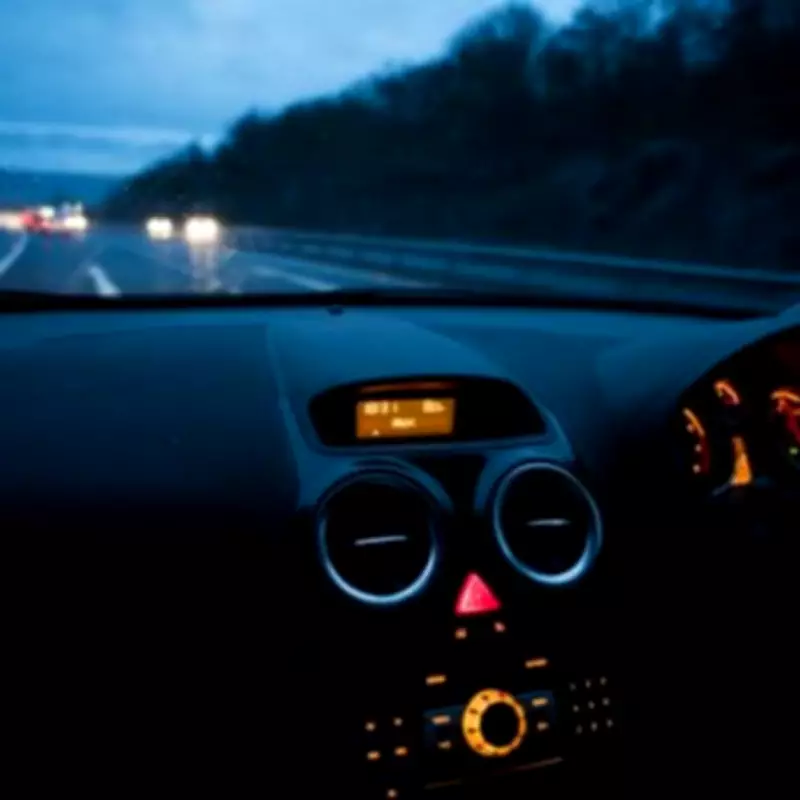
Older drivers across the United Kingdom are facing the difficult prospect of giving up driving entirely as a concerning phenomenon sweeps the nation's roads. Startling new research indicates that intense headlight glare from modern vehicles is creating hazardous conditions, particularly during nighttime travel, with elderly motorists among the most severely impacted.
The Dazzling Danger on UK Roads
According to comprehensive research conducted by Startline Motor Finance, a staggering 55 per cent of British drivers believe that headlight glare is making it significantly more difficult for all road users to stay safe, especially when travelling after dark. The study reveals that half of all drivers have been compelled to slow down or bring their vehicle to a complete stop due to being dazzled by oncoming headlights, while 47 per cent report needing several seconds to fully recover their vision after such incidents.
Older Motorists Particularly Vulnerable
Elderly drivers are experiencing particularly severe effects, with many reporting that they feel forced to 'swerve' across roads when confronted with blinding headlight glare. The research indicates that one in five drivers have actively swerved to avoid oncoming vehicles specifically because of glare-related visibility issues. This represents a substantial safety concern for all road users, but especially for older drivers whose reaction times and visual recovery may be naturally slower.
Paul Burgess, CEO of Startline Motor Finance, provided sobering commentary on the findings. "Only eight per cent of motorists in our research believe the brighter headlights fitted to modern cars are making driving safer and that the better visibility they offer outweighs the possibility of being dazzled," he stated. "That's quite a damning verdict on the newer technology being used. Especially, the finding that one in five drivers have actively swerved out of the way of an oncoming vehicle because of glare is worrying."
The Technical Reality Behind the Glare
The brightness of vehicle lights is scientifically measured in lumens, with higher lumen counts indicating brighter illumination. Denise Voon, clinical adviser at The College of Optometrists, explained the technical differences between modern and traditional lighting systems. "LED lights differ to traditional halogen headlights in a number of ways," she clarified.
"Firstly, LED lights are much brighter, exhibiting 200 lumens per watt compared to 24 lumens per watt in traditional halogens. Secondly, the colour temperature of LED lights are much bluer and whiter (5000K – 6500K) and mimic natural daylight much more closely than the warmer yellow/orange (3200K) of halogens. Lastly, LED lights are much more directional than halogen lights, whose light tends to be a lot more scattered."
Government Response and Future Solutions
The Department for Transport has acknowledged the growing public concern regarding headlamp glare across the UK. A spokesperson confirmed: "We know there is increased public concern about headlamp glare - that's why we have commissioned independent research to better understand the root causes, which will help identify potential mitigations. There is also work underway at an international level on headlight glare prevention, which we will consider."
This governmental recognition comes alongside concerning behavioural changes among drivers. Many motorists, particularly older drivers, report using their vehicles less frequently at night due to safety concerns related to headlight glare. As Paul Burgess concluded: "Glare is an issue they believe is making driving more dangerous and even causing them to use their car less at night because they feel less safe. Change is necessary."
The combination of technological advancement, changing driving behaviours, and governmental investigation suggests that headlight glare represents a significant and growing challenge for UK road safety, with older drivers facing particularly difficult decisions about their continued mobility and independence.