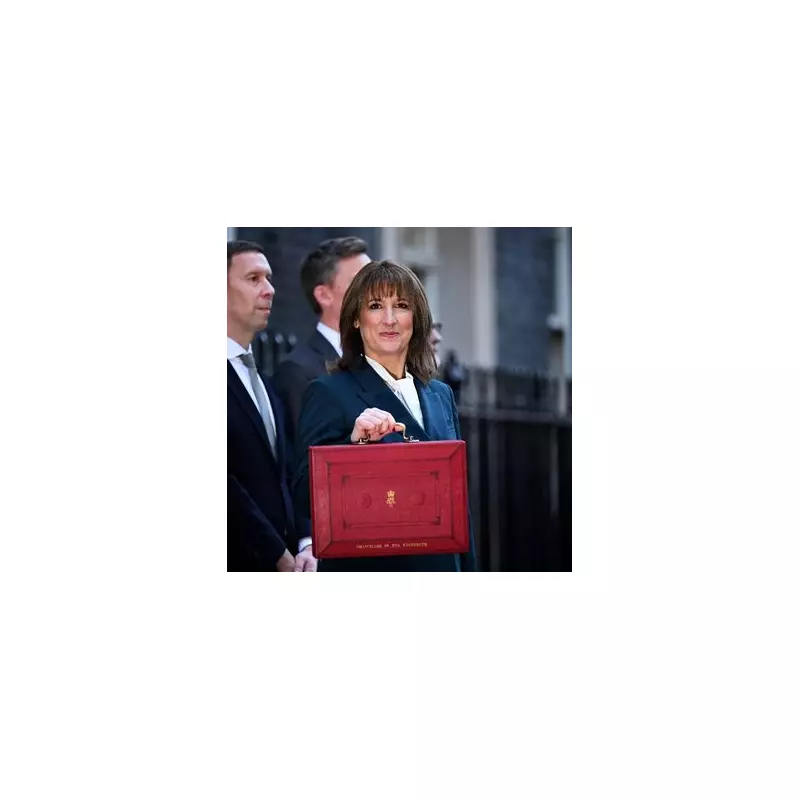
Business leaders across the North East have delivered a sharply divided response to Chancellor Rachel Reeves's Winter Budget, revealing a landscape of cautious optimism tempered by significant concerns over rising costs and consumer spending power.
Concerns for City Centres and Consumer Spending
The budget, which was accidentally published early by the Office for Budget Responsibility, outlined £26bn in annual tax increases alongside measures designed to stimulate investment. However, Stephen Patterson, Chief Executive of Newcastle BID company NE1 Ltd, which represents 1,300 city centre businesses, warned that the announcement piles more pressure on the retail and leisure sectors.
"There has been no shot in the arm for businesses or the economy," Patterson stated. He highlighted that the freeze on income tax thresholds for the next three years, combined with no tax cuts for workers, would leave households with less disposable income. This comes at a difficult time for the sector, with Patterson noting that 16 hospitality venues have closed in Newcastle since the last budget.
Echoing concerns about employment costs, Ben Quaintrell, CEO of estate agency My Property Box, pointed to challenges for landlords and investors, while Simon Bailes of Simon Bailes Peugeot questioned the consistency of government policy on electric vehicles following the announcement of a new 3p-per-mile tax for EV drivers.
Guarded Optimism for Regional Investment
In contrast, the North East Chamber of Commerce struck a more positive note, with Deputy Chief Executive Rhiannon Bearne acknowledging the Chancellor's "delicate balancing act." While expressing caution about the tax burden on households, Bearne welcomed several specific measures for the region.
She highlighted the confirmation of £13bn of flexible funding devolved to seven Mayoral Strategic Authorities, including the North East Combined Authority, as a direct response to their calls for deeper devolution. Other positive developments included £16m for a new STEM Centre in Darlington, a Creative Places Growth Fund, and an AI Growth Zone.
"There is cause for guarded optimism," Bearne said, "but what matters now is how today's measures play out in practice."
Industry-Specific Impacts and Omissions
The reaction from other sectors was equally mixed. Tim Barrett, Chair of Construction Alliance North East (CAN), said calls for more government support had gone unheard, leaving the industry facing "tougher conditions" despite a continued push for housing and infrastructure.
In the technology and defence sector, Dr Arnab Basu, CEO of Sedgefield-based Kromek, welcomed the "clear and welcome course for defence" and increased spending on innovative technologies. For private clients, Leah Duffield of Muckle LLP noted that the budget brought simplification for inheritance tax planning for spouses and civil partners.
However, the CBI's Chief Executive, Rain Newton-Smith, criticised the budget's "scattergun approach to tax," warning it risked leaving the economy "stuck in neutral." She particularly highlighted the £2,000 cap on salary sacrifice pension contributions, which will be subject to National Insurance from April 2029, as a measure that would increase employment costs.
Overall, the budget has set a clear direction for the UK's finances, but its ultimate impact on the North East economy will depend on how these measures are implemented in the coming months.