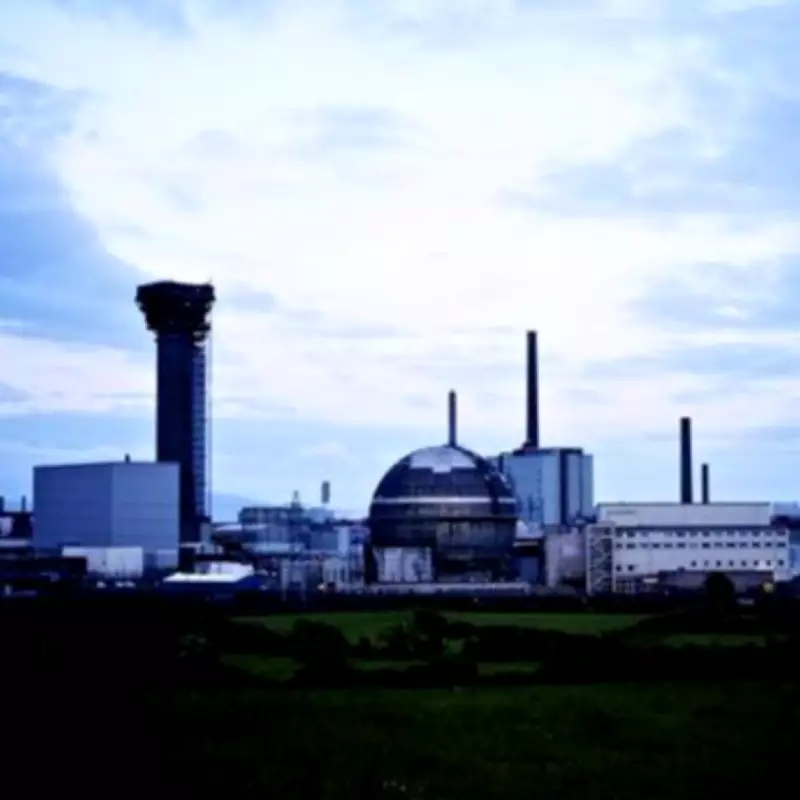
West Cumbria's 'Supercomputer' Energy Project: Pioneer Park Plans Detailed
A West Cumbrian energy initiative, dubbed a 'supercomputer for west Cumbria', took center stage at a Cumberland Council meeting this week, with detailed plans for the Pioneer Park project being unveiled.
Masterplan Development and Project Goals
Members of Cumberland Council's nuclear issues board convened at Allerdale House in Workington on Monday, March 23, to review the Pioneer Park project. A nuclear industry advisor informed the board that a comprehensive masterplan is currently in development. This masterplan will specify:
- The status of the land adjacent to Sellafield
- Detailed development strategies
- Plans for utilizing the generated power
The primary objective of Pioneer Park is to diversify the west Cumbrian economy and create a broad spectrum of job opportunities for the community's long-term prosperity. Notably, the project aims to use the generated power to attract inward investment rather than supplying it to the national grid.
Energy Source and Infrastructure Details
The advisor emphasized that small modular reactors (SMRs) are essential for powering the development, as renewable energy sources are not viable for this project. It is anticipated that two or three credible developers will be approached in September.
The proposed SMRs could potentially power artificial intelligence systems or data centers. Councillor Joseph Ghayouba (Bransty, Labour) highlighted that such facilities are resource-intensive, requiring substantial water volumes for cooling and specialized personnel, underscoring the need for targeted skills training for young people.
Regarding land use, the advisor noted that 200 acres would be sufficient to accommodate the facility, with 400 acres available overall. He stated, "It's just a question of which 200 acres." He also stressed that the project must not disrupt the Sellafield program.
Security and Market Engagement
Addressing security concerns, Councillor Andy Pratt (Millom Without, Conservative) inquired if placing a data center would pose risks to the area. Council leader Mark Fryer (St Johns and Great Clifton, Labour) reassured that security is already high and would not be compromised.
The report detailed that BEC (Energy Coast West Cumbria Ltd) initiated the Pioneer Park Prospectus and market engagement in early August, completing it in late October after discussions with over 40 interested parties. These organizations included:
- Developers
- SMR sellers, including all four Great British Energy – Nuclear shortlisted technologies
- Renewable energy sellers
- Low carbon industrial organizations focusing on hydrogen and sustainable aviation fuels
- Data center and digital services providers
- Potential delivery partners
Project Feasibility and Future Outlook
The report concluded that there is significant market interest in Pioneer Park. Given land constraints, only SMRs can deliver the necessary power to attract investment and diversify the economy. While small pockets of renewables like wind or solar PV may be feasible on unsuitable land, the focus remains on SMRs.
Due to west Cumbria's geographical and infrastructure limitations, a digital technology-based economy is preferred over large-scale clean industrial options, though a single mid-range industrial facility could complement the data-led economy.
The land designated for new nuclear power generation is sufficient to host three or more SMRs alongside large-scale data centers. However, the current land shape is restrictive, a issue to be addressed in the masterplan process.
Organizations in the digital technology sector unanimously recommended an interim solution to power early data center deployment before SMRs and larger data centers are operational. Balancing energy generation to attract investment without overloading the local grid will be crucial and will influence SMR technology selection.
The report identified a major risk: few credible, funded developers are available. Yet, as a first-of-its-kind nuclear-powered AI Growth Zone, Pioneer Park could become a scalable, exportable product for the UK economy.
SMR vendors and developers estimate a project timeline of approximately 10 years to reactor operations. While aiming for up to 1Gw generating capacity, BEC is also discussing with a micro-reactor vendor for potential smaller-scale deployment on an earlier timeline.